When I chat with electrical engineers and facility managers who work on high-voltage setups, one question comes up more often than you’d think: “How do I pick the right MCB for this system?” A lot of folks treat MCBs (Miniature Circuit Breakers) like one-size-fits-all parts, especially when we’re talking high-voltage stuff—not the little 120V home breakers everyone knows. But here’s the thing: mess up the selection, and you’re looking at downtime, even fire risks. As someone who’s spent 10 years selling MCBs to industrial and commercial clients, I’ve seen both the wins of getting it right and the headaches of cutting corners. Let’s break this down like we would over a quick coffee at a trade show, no boring textbook jargon that makes your eyes glaze over. MCB

First, let’s clear up what “high-voltage” means here. For MCB purposes, that’s not just the 240V you get in a house. We’re talking 480V, 600V, even up to 1,000V DC for solar or battery storage setups. Regular residential MCBs can’t handle that kind of juice—they’ll arc, trip incorrectly, or straight-up fail if you force them into a high-voltage spot. That’s rule number one: never grab a standard MCB for high-voltage work. But even among high-voltage MCBs, picking the wrong one is easy.
The biggest mistake I see engineers make? Only looking at the current rating. Yeah, that’s important—if your circuit runs 30 amps, you don’t get a 15-amp MCB. But there’s way more to it. Let’s start with the basics that can’t be skipped.
First, voltage rating. This is non-negotiable. Your MCB has to be rated for exactly the maximum voltage your system runs. If your panel is 600V, don’t buy a 480V MCB. I had a client a couple years back who tried to save a buck by using a 480V MCB in a 550V industrial motor circuit. The first time the motor hit a startup surge, the breaker arced internally—smoke everywhere, $12k in motor damage, plus a day of downtime. He ended up having to swap it for a 600V MCB, and we made a note to walk him through voltage specs before he placed his next order. Arc flash is a huge risk here, too. High voltage means a lot more energy when a breaker trips wrong. So if your MCB’s voltage rating is too low, it can’t contain that arc, which is basically a tiny explosion.
Next, current rating, but not just the continuous load. People often forget that circuits have spikes—like when a motor starts, or a heater kicks on. For high-voltage systems, you need an MCB that can handle the inrush current without tripping unnecessarily, but also trip fast if there’s a real fault. Here’s a quick trick: take your continuous operating current, multiply it by 1.25 (that’s a NEC rule, by the way, for continuous loads) and then check the inrush current of your equipment. For example, if a 480V conveyor runs 20 amps continuously, but its startup inrush is 80 amps for 2 seconds, you need an MCB that has a “C curve” or “D curve” (those are the trip curves, by the way) rated to withstand that 80-amp spike. I explain curves like this: Curve B is for home circuits (trips at 2-5x current, good for lights and outlets), Curve C is for small motors (trips at 5-10x, handles mild surges), Curve D is for heavy industrial equipment (trips at 10-20x, for big motors, welders, that kind of stuff). If you pick Curve B for a 50-amp motor, it’ll trip every time it starts. That’s false tripping, which kills productivity. I once had a warehouse manager tell me his team was chasing their tails because their MCB kept tripping for no reason—turned out they used a B curve on a forklift charger with 150-amp inrush. Swapped to a D curve, no more issues.
Then there’s breaking capacity. This is how much fault current the MCB can safely interrupt. Let’s say your system has a maximum fault current of 10,000 amps. You need an MCB with a breaking capacity at least 10,000 amps. If your MCB can only break 5,000 amps, it’ll get stuck mid-trip during a short circuit—boom. I’ve seen utility clients skip this step too, even though it’s on every spec sheet. They think “high voltage = high breaking capacity” but no, you have to match it to your specific system. How do you find your fault current? Your electrical contractor can run a calculation for you, or if you’re swapping out an old breaker, check the old one’s breaking capacity number. Don’t guess here—if you get this wrong, you’re playing with fire, literally.
Now, DC vs. AC. A lot of people mix these up, especially with solar or battery setups that run DC. AC MCBs work with alternating current, which flips direction, so when the breaker trips, the arc extinguishes easier. DC is steady—no flip, so the arc is way harder to put out. A DC MCB has special contacts and a design to kill that arc fast. I had a solar installer once try to use an AC MCB on a 800V DC string. The breaker didn’t trip during a short, and the arc ran along the bus bar for a full second before they could shut off the main. Scary stuff. If your system is DC, make 100% sure your MCB is labeled “DC rated” with a voltage matching your setup.
Special considerations for high-voltage: things like ambient temperature. If your panel is in a hot warehouse (95°F or higher), the MCB’s current rating drops. Most standard MCBs are rated for 40°F, so if it’s hotter than that, you need a higher amperage MCB to compensate. I always tell clients to check the manufacturer’s temp derating chart—we post it right on our product pages so it’s easy to find. Another one: if your system has tight space in the panel, you might need a compact MCB. We make slim-line high-voltage MCBs that fit in more rack spaces, no loss in performance.
Wait, also: certification. Don’t buy random MCBs from a no-name supplier. Look for certifications like UL, IEC, or CSA. That means the breaker’s been tested to meet safety standards. I can’t tell you how many cheap knockoff MCBs we’ve had customers bring us that looked identical, but when we tested them, their voltage rating was 100V lower than labeled, or their breaking capacity was way off. That’s a risk I won’t let our products have—we third-party test every batch so you know what you’re getting.
Let’s walk through a real example to make this concrete. Suppose you’re setting up a 600V AC industrial HVAC system, continuous load is 40 amps, startup inrush is 200 amps, fault current is 15,000 amps, and your panel is in a 90°F factory. What do you do? First, voltage: pick a 600V rated MCB, not 480. Current: 40 amps continuous x 1.25 = 50 amps, and inrush is 200 amps, so that’s 5x the continuous load—so a Curve C or D? 5x is the bottom of Curve C, so Curve C would work, but if the inrush is longer than a second, go D for extra safety. Breaking capacity: 15,000 amps, so get an MCB rated for at least that. Ambient temp: 90°F, so add about 10% to the current rating—so a 55-amp MCB would be better than 50, to compensate for heat. That’s it, no guesswork, all based on real specs.
Common mistakes I still see: Using a home MCB for high-voltage (don’t do this), ignoring inrush current (leads to false trips), skipping fault current calculation (big safety hazard), mixing DC and AC MCBs (arc disaster). If you’re working on a brand new system, don’t rely on old blueprints—do a full audit of your circuit specs. If you’re replacing a breaker, cross-reference every number on the old one with the new one, just make sure the specs match your current system (don’t just swap the same model if your system voltage changed since you installed the original).
Now, let’s talk about choosing the right supplier. As someone who’s been in this game, I know it’s not just about the price. You want a supplier who knows their stuff—can walk you through these specs, not just say “here’s your 50-amp breaker.” We have engineers on our team who can help you run through your numbers, answer questions about trip curves or breaking capacity, even send over test reports if you need them. We don’t do hidden fees, and all our MCBs come with a 1-year warranty, which is more than a lot of budget brands offer. If you’re stuck on a spec, or you just want to make sure you’re ordering the right thing, reach out—we’re happy to chat through it, no pressure.
At the end of the day, picking an MCB for high-voltage isn’t rocket science, but it’s not a grab-bag either. It’s about matching the breaker’s ratings to your system’s exact specs, not cutting corners on voltage, breaking capacity, or trip curves. If you skip even one of those steps, you’re asking for problems. I’ve seen too many clients go cheap on MCBs and end up paying way more in downtime and repairs. Our job as a supplier is to make sure you get the right MCB the first time, so you don’t have to deal with that headache.
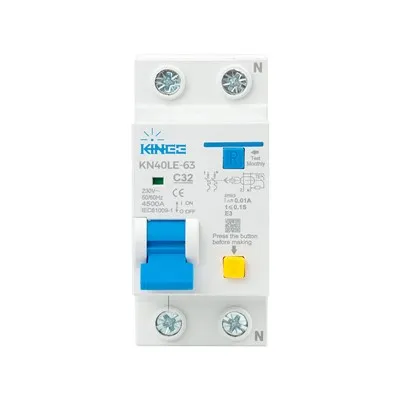
If you’re working on a high-voltage system—whether it’s industrial machinery, solar arrays, commercial panels, or anything else—and you’re not sure which MCB is right, don’t hesitate to get in touch. We can go over your specs, help you narrow it down, and make sure you get a breaker that’s safe, reliable, and fits your budget. No generic sales pitches, just actual answers from people who work with MCBs every single day.
Combiner Box References
- National Electrical Code (NEC), Article 240 for overcurrent protection requirements.
- IEC 60947-2, Standard for low-voltage switchgear and controlgear – Part 2: Circuit breakers.
- Underwriters Laboratories (UL) 489, Standard for safety for molded-case circuit breakers, molded-case switches, and circuit breakers for motor circuits.
- Electrical Safety Foundation International (ESFI), Arc Flash Hazard Prevention Guidelines for Industrial Electrical Systems.
Wenzhou Kinee Electrical Co., Ltd.
We are one of the most professional mcb manufacturers and suppliers in China, featured by quality products and good price. Please rest assured to buy advanced mcb made in China here from our factory. We also accept customized orders.
Address: Unit 1, Building 31, Wenzhou Wenbo Science and Technology Industrial Park, No. 706 Yanyun Road, Lingkun Street, Oujiangkou Industrial Cluster Area, Wenzhou, Zhejiang Province
E-mail: sandyma@kinee.net
WebSite: https://www.kinee.net/
