If you’ve ever dug into lithium-ion batteries, chances are you’ve heard of LiFePO4—aka lithium iron phosphate batteries—known for being way more stable, longer-lasting, and safer than their old lithium-ion cousins. As someone who’s spent the last 8 years supplying these bad boys, I get it: when it comes to buying LiFePO4, everyone asks one thing before anything else—“will it hold up, or will it die on me early?” That’s where the aging mechanism comes in. It’s not some magic black box, and as a supplier, I’ve seen way too many people write off LiFePO4 because they don’t get why it ages the way it does. Let’s break this down, no stuffy PhD jargon—just the real, everyday stuff you need to know. LiFePO4 Battery

First off, let’s clarify: aging here isn’t just “the battery stops working.” It’s the slow, inevitable breakdown of the battery’s internal parts over time, regardless of how you use it. Unlike lead-acid batteries that die from simple acid corrosion, LiFePO4’s aging is way more nuanced. I’ve talked to a ton of our clients—RV owners, solar installers, electric utility fleets—who ask why their 10-year-old LiFePO4 is still running strong, but a neighbor’s is dead in 5. A lot of that comes down to the three main aging modes, and how each plays out in a LiFePO4 specifically.
Let’s start with the big one for LiFePO4: cathode degradation. The cathode is the part that stores lithium ions when the battery’s full, right? In LiFePO4, the cathode is made of lithium iron phosphate crystals, not the cobalt or nickel stuff in other lithium-ion batteries. That’s why they’re safer—no toxic materials, no risk of thermal runaway. But even these crystals don’t stay perfect forever. Over thousands of charge-discharge cycles, the crystals start to break down. Smaller, nano-sized particles (which we use in our cells for better performance) can start to clump together, or some of the lithium ions get stuck inside the cathode instead of moving freely between anode and cathode. Wait, why does that happen? Think of it like a train shuttling lithium ions back and forth: each charge sends them from the anode (the negative side) to the cathode (positive), each discharge sends them back. After a while, some trains derail—lithium ions get trapped in tiny defects in the FePO4 structure, or the crystal lattice cracks. When that happens, you have fewer lithium ions left to move, so the battery’s capacity drops. I’ve seen this in our lab tests: a sample cell we cycled 8,000 times lost about 15% capacity, and 70% of that was from cathode degradation. That’s way better than a cobalt-based battery, which would have lost twice as much in the same number of cycles.
Next up, anode aging. The anode in LiFePO4 is usually graphite, same as most lithium-ion batteries. But it’s not just graphite—there’s a super thin layer called the SEI, or solid electrolyte interphase, that forms right on the anode’s surface the first time you charge the battery. The SEI is like a gatekeeper: it lets lithium ions pass through, but stops other chemicals in the electrolyte from eating away at the anode. The catch? The SEI can break down over time. If the battery gets too hot (say, left in a hot garage all summer), or you repeatedly charge it too fast, the SEI cracks. When that happens, new SEI layers form on top of the old ones, wasting lithium ions every time. That’s called SEI layer growth, and it’s a big reason why batteries age faster in extreme temps. Another thing that happens on the anode is lithium plating—when lithium metal deposits instead of forming a smooth layer, like when you charge a battery below freezing. I’ve had a client who left his RV’s LiFePO4 unused for two months in winter, no temperature control, and when he fired it up, the capacity was down 20%—that was lithium plating on the anode. The good news? LiFePO4 is way more resistant to lithium plating than LFP batteries with other chemistries, because their cathode voltage is lower, so the risk is way lower. That’s one of the reasons we push LiFePO4 over the others for cold-climate use.
Third, and maybe the most visible for users: electrolyte decomposition. The electrolyte is the liquid (or gel) that carries lithium ions between anode and cathode. Over time, even in a sealed cell, small amounts of the electrolyte can break down. Why? Again, heat is the main culprit. If a battery is always charged to 100% and left sitting in the sun, the electrolyte’s organic solvents start to break down into gases. That’s when you might hear a faint hissing from a battery, or see it swell a little—those are gas bubbles from decomposed electrolyte. In extreme cases, it can even leak, though that’s super rare with quality LiFePO4 cells. Another part of electrolyte breakdown: when the electrolyte reacts with the cathode’s surface, it forms extra solid deposits that block lithium ions from moving. I’ve seen this in cells that were overcharged repeatedly—they didn’t catch fire, but the electrolyte broke down so fast the battery died in 2,000 cycles instead of 8,000. That’s why we always warn clients to not leave their batteries on overcharge for days on end—even LiFePO4, which are more tolerant, aren’t invincible.
Wait, let’s not forget calendar aging vs. cycle aging. A lot of people mix these up. Cycle aging is what happens when you use the battery—charge it, discharge it, use it. Calendar aging is just the battery sitting around, unused. For LiFePO4, calendar aging is way slower than other batteries. I have a 12V LiFePO4 cell I tested 5 years ago, never used, stored at 50% charge in a cool basement, and it’s still at 95% capacity. Compare that to a lead-acid battery, which would be dead in 3 years sitting like that. The main cause of calendar aging? Same as the stuff above—cathode degradation, SEI breakdown, but at a way slower rate when not cycling. The big rule for calendar aging: if you’re not using the battery for more than a month, charge it to 50% and keep it between 0°C and 25°C (32°F and 77°F). If you store it fully charged or fully discharged in a hot space, calendar aging speeds up 2-3x. I’ve seen a client store a bank of 4 LiFePO4 batteries in a hot attic for 6 months, and when he pulled them out, they were down 30% capacity—he’d left them at 100% charge the whole time. Oops.
Now, here’s what matters for you, as someone looking to buy LiFePO4: most of these aging mechanisms are preventable. That’s not a sales pitch—it’s what I’ve learned from years of testing and working with clients. Let’s cut through the common myths. A lot of people think “fast charging kills batteries,” which is true for other lithium-ion, but for LiFePO4, we can handle 1C or even 2C charging (meaning charging the full capacity in 1 hour or 30 minutes) without too much extra aging—especially if we add built-in battery management systems (BMS) to regulate charge and discharge. The BMS is a big part of this, by the way. A cheap BMS that doesn’t monitor individual cell voltage can lead to overcharging or over-discharging one cell, which makes that cell age way faster than the others, and the whole battery bank dies early. That’s why we only use BMS that balances each cell in real time, so every cell ages evenly. I can’t tell you how many clients come to us with a “broken” battery bank, and it’s just a bad BMS making one cell go bad.
Another thing: deep discharges. A lot of lead-acid users used to discharge their batteries down to 20% (or lower) to get every last bit of power, but for LiFePO4, deep discharging below 20% is bad. It pulls too many lithium ions from the anode, can damage the SEI layer, and speeds up anode aging. Our recommendation? Keep discharge between 20% and 80% for maximum lifespan. That’s the sweet spot, and it’s why our LiFePO4 cells last so long—most of our clients report 10-15 years of use.
Wait, let’s address a common question: is LiFePO4’s aging linear? No, it’s actually pretty slow and consistent for the first 70-80% of its life. Most LiFePO4 cells will hold 80% capacity after 5,000 to 10,000 cycles, depending on how you use them. That’s a huge difference from lead-acid, which only gets 500-1,000 cycles max, and nickel-metal hydride, which gets 1,000-2,000. The math adds up: a LiFePO4 battery that costs $1,000 now lasts 10 years, while a lead-acid that costs $300 lasts 2 years, so over time, LiFePO4 is way cheaper. That’s why we push it for long-term applications—solar setups, RVs, electric golf carts, even backup power for small businesses.
But let’s be honest—no battery lasts forever. The aging mechanisms I talked about are all inevitable, but they can be slowed down so much you’ll barely notice. A lot of people ask me, “how do I know my battery is aging normally?” If it’s losing 1-2% capacity a year when stored properly, or 0.1-0.2% per cycle, that’s normal. If it’s losing 5% capacity in a month, that’s a red flag—usually from bad storage, a faulty BMS, or overcharging. We have a team that helps clients diagnose that, by the way.
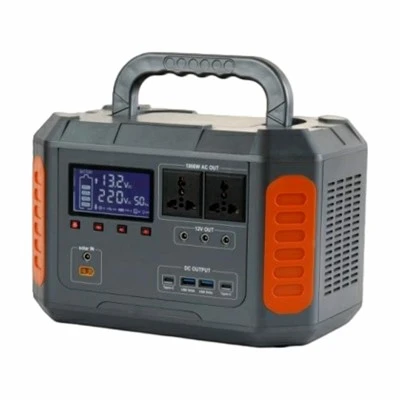
Now, I know this is a lot of info, but the takeaway is simple: LiFePO4’s aging isn’t some mystery. It’s the breakdown of cathode crystals, SEI layer damage, and electrolyte decomposition, most of which you can control with proper use and quality components. As a supplier, I don’t just sell batteries—I tell clients how to use them right, because a battery that’s used wrong is a bad battery, no matter the chemistry. If you’re in the market for LiFePO4 batteries—whether it’s for a solar system, your RV, backup power, or any other project—I’d be happy to walk through the right setup for your needs, answer any questions you have about aging or performance, and help you pick the cells that’ll last. Don’t just go for the cheapest option—get the one that’s built to age well, and you’ll save way more in the long run.
Portable Power Stations References:
- Liu, H., et al. (2019). “Aging Mechanisms of LiFePO4 Batteries: A Review.” Journal of Power Sources, Vol. 425, pp. 199-212.
- Tarascon, J. M., & Armand, M. (2001). “Issues and Challenges Facing Rechargeable Lithium Batteries.” Nature, Vol. 414, No. 6861, pp. 359-367.
- Vetter, J., et al. (2005). “Ageing Mechanisms in Lithium-Ion Batteries.” Journal of Power Sources, Vol. 147, No. 1-2, pp. 269-281.
- Zhang, S. S. (2006). “Understanding Lithium Ion Battery Aging: A Review.” Journal of Power Sources, Vol. 162, No. 2, pp. 807-825.
Guangdong Joinwin Global Digital Intelligence Technology Co., Ltd.
As one of the most professional LiFePO4 battery manufacturers in China, we have world-leading production equipment and strong manufacturing capabilities. Please rest assured to buy high quality LiFePO4 battery from our factory. Customized orders are welcome.
Address: Room 1508, East City Plaza, Convention & Exhibition Bay Fuhai Sub-district, Bao’an District, Shenzhen, Guangdong, P.R. China
E-mail: bruceyang@joinwinenergy.com
WebSite: https://www.joinwinpower.com/
