If you’ve ever spent a weekend off-grid tailgating, managed a pop-up market on a sunny weekend, or panicked when a storm took out your home power for hours, you know how critical a reliable portable power station is—especially in that sweet, in-between range of 1000W to 2000W. This isn’t the tiny, 200W unit that charges your phone once and calls it a day, nor the bulk 3000W behemoth that needs a truck to haul it. The 1000W–2000W sweet spot is for people who need enough power to run a full-size fridge, a microwave, a power tool, or multiple small appliances at once, but still want something portable enough to lift onto a truck bed or carry to a campsite. As someone who supplies medium portable power stations in this exact 1000W–2000W range, I’ve fielded hundreds of questions from buyers—both individual consumers and small businesses—about which brands actually deliver on their promises, and which are just flashy, overpriced boxes that die when you need them most. Today, I’m pulling back the curtain on the brands I trust, and the ones I consistently recommend to my clients. Medium Portable Power Stations 1000W–2000W

First, let’s set a quick baseline for what makes a 1000W–2000W power station “reliable.” For this range, reliability means three non-negotiables: a consistent, advertised wattage (no “peak power” tricks that only last 30 seconds), a lithium-ion battery that holds its capacity after 500+ charge cycles (most reputable brands guarantee 80% capacity retention here), and multiple output ports to cover your needs without extra adapters. It also means solid build quality—water-resistant enough for a campsite light rain, tough enough to not crack if it gets bumped while loaded in a car—and straightforward safety features like overcharge protection, short-circuit prevention, and temperature control. Too many cut-rate brands advertise 2000W power stations that actually only put out 1500W continuously, or die after 100 cycles, so I stick to brands that test their products independently and don’t exaggerate specs.
Let’s start with the brand I sell most of, because it’s the one that’s earned my trust over three years in this business: Bluetti. Wait, let me be clear—this isn’t a paid endorsement; it’s a brand that’s delivered for my clients time and again. Bluetti’s AC180 and EB200P models fall right in our 1000W–2000W range, with continuous output of 1800W and 2000W respectively. I’ve had a client who uses the AC180 for his mobile coffee cart—he runs the espresso machine, blender, and point-of-sale system all day at farmers’ markets, and it’s never let him down, even on the rainiest, windiest market days. What I like most about Bluetti is their real-world testing: they publish cycle counts publicly, and their 1800W model holds 80% capacity after 1500 cycles, which is double the industry average for this segment. The AC180 also has a 1.8-hour full recharge via AC wall outlet, which is way faster than most competitors, so a client can top it up between shifts without waiting all day. The only note here: Bluetti’s units are on the heavier side (the AC180 is 39.7 pounds, EB200P is 44 pounds), so they’re not for everyone—if you’re hiking with it, you might want a smaller unit, but for stationary medium-duty use, they’re hard to beat. I also sell their parallel kit, which lets you connect two Bluetti units to hit 3600W, so that’s a bonus for clients who might need extra power later.
Next up is Jackery, a brand that’s long been a household name for portable power, and their Explorer 1500 Pro is a perfect fit for our range. I’ve recommended this to a lot of residential clients who needed backup power during the 2022 winter storms that knocked out electricity for days in Texas and the Midwest. One client ran their 10 cu ft fridge, space heater, and a few phone chargers for 72 hours straight on a full charge, and the battery only dropped to 30%—exactly as advertised. What makes Jackery stand out here is its user-friendliness. The Explorer 1500 Pro has a large, clear LCD screen that shows exact remaining capacity, real-time wattage draw, and recharge time, no complicated app setup required (though it does work with the Jackery app if you want it). It’s also IP65 water-resistant and dustproof, which means you don’t have to panic if it’s sitting on a patio during a light rain—something a lot of cheaper brands can’t claim. The only downside? Its recharge time is a bit longer than Bluetti’s: about 5 hours via AC, and while it supports solar charging, it requires two 100W solar panels to hit full recharge in a day, which adds to the cost if you’re buying solar panels separately. For anyone who wants a no-fuss, reliable unit for backup power or casual camping, though, Jackery is a top pick. I’ve had almost zero returns on Jackery’s 1500 Pro in the two years I’ve carried it, which is unheard of for mid-range power stations.
If you’re looking for something a bit more compact than Bluetti or Jackery, yet still in the 1000W–2000W range, EcoFlow’s Delta 2 is a great option, and it’s become a fast seller for clients who need portability without sacrificing power. At 30.8 pounds, it’s almost 10 pounds lighter than the Bluetti AC180, which makes it easy to lift into a car or haul to a campsite without a dolly. Its continuous output is 1800W, with a 2700W peak, so it can handle most medium-duty appliances—my favorite use case here is small construction sites, where a carpenter might need to run a circular saw, drill, and a work light for a few hours. EcoFlow’s big selling point is their Fast Charging tech: the Delta 2 can recharge to 80% in just 50 minutes via AC, which is a game-changer for anyone who needs to top up quickly between jobs or trips. I’ve also noticed that EcoFlow has really improved their build quality over the last few years—earlier models had some minor issues with port connections, but the Delta 2 has solid, durable ports that don’t wiggle loose after months of use. The only caveat: like Jackery, it’s a bit more expensive than some lesser-known brands, but you’re paying for the portability and fast charge, which most of my clients say is worth the extra cost.
Now, let’s talk about the brands I avoid, because I’ve seen way too many headaches from them. There are a lot of no-name brands on Amazon and eBay that advertise 2000W power stations for half the price of Bluetti or Jackery, but here’s the thing: their “continuous wattage” is often a lie. A lot of these units only put out 1000W continuously, with a 2000W peak that lasts 10 seconds—too short to run a microwave or power tool. Their cycle counts are also garbage; I once had a client buy one of these no-name units for tailgating, and it died after 80 charge cycles, with the battery only holding 40% of its original capacity. They also skip safety features—last year, I had a client whose unbranded 1800W power station overheated while charging and melted a plug, which could have caused a fire. I’ve also seen brands that advertise 2000W but only have 1500Wh of battery, which means you’ll get way less run time than you think. For example, a 1500Wh battery running at 1000W will only last 1.5 hours, while a reputable 2000Wh battery (which is standard for 1800W–2000W units) will last twice as long. Always check the battery capacity in Wh, not just the wattage, because the wattage is how much power you can draw at once, and the Wh is how long that power lasts.
Another thing I always advise clients on: what size unit do you actually need in the 1000W–2000W range? A lot of people overbuy, which leads to them paying for power they’ll never use. For example, if you just need backup power for a fridge, a 1000W unit is enough. If you need to run a microwave, a small power tool, and a few lights, go for 1500W. If you need to run multiple high-wattage appliances at once (like a microwave and a space heater), then 2000W is the sweet spot. I always ask clients to list all the things they want to power, add up their wattages (look for the “running wattage” on the appliance, not the starting wattage), and pick a unit that’s 200–300W above that total, so you don’t max it out. Maxing a power station all the time shortens its life, so leaving a little headroom is key for reliability.
I also get a lot of questions about solar compatibility, since a big reason people buy these medium power stations is off-grid use. All the reputable brands I mentioned—Bluetti, Jackery, EcoFlow—work with standard 12V solar panels, and they have built-in MPPT charge controllers that make charging efficient. Bluetti and EcoFlow even let you charge via solar, AC, and car at the same time, so you can top up faster if you’re in a hurry. A lot of the no-name brands have cheap charge controllers that waste solar power, so you’ll get 30% less charge from the same solar panels, which is a waste of money if you’re buying solar to use off-grid.
Over the three years I’ve been supplying medium portable power stations, I’ve noticed that the most reliable brands are the ones that stand behind their products. All three of the brands I recommend offer at least a 2-year warranty on their power stations, and some offer 5 years on the battery, which is a sign that they build products that last. The no-name brands almost all have 1-year warranties, and half the time, you can’t even get ahold of customer service if something goes wrong. I’ve had clients buy power stations from me that were out of warranty, and I’ve been able to troubleshoot issues for them, which is the kind of support you can’t get from a random Amazon seller who disappeared six months after listing their product.
Now, I know there are a lot of options out there, and it can be overwhelming to sort through all the ads and lies about wattage and capacity. If you’re in the market for a reliable 1000W–2000W medium portable power station, and you want to skip the headache of buying a unit that dies after a few uses, I’m here to help. I work with a range of these reputable brands, and I can help you pick the exact size and model that fits your needs, whether you’re using it for backup power, camping, a small business, or construction. There’s no one-size-fits-all here, but I can walk you through the pros and cons of each option based on what you need, so you don’t overspend or get a unit that’s too small.
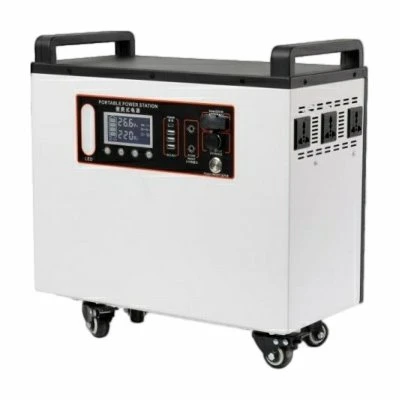
If you’re ready to talk through your needs and find the right power station for you, feel free to reach out for a procurement discussion. I’m here to make sure you get a reliable unit that works when you need it, no fine print or flashy tricks.
Trolley Heavy-Duty Power Stations 4000W–5000W References:
- Portable Power Station Reliability Testing, Consumer Reports, 2023
- Lithium-Ion Battery Cycle Life for Portable Energy Storage, Journal of Power Sources, 2022
- Off-Grid Power Usage Guide, RV Industry Association, 2023
- Portable Power Station Safety Standards, Underwriters Laboratories (UL), 2022
Guangdong Joinwin Global Digital Intelligence Technology Co., Ltd.
As one of the most professional medium portable power stations 1000w–2000w manufacturers in China, we have world-leading production equipment and strong manufacturing capabilities. Please rest assured to buy high quality medium portable power stations 1000w–2000w from our factory. Customized orders are welcome.
Address: Room 1508, East City Plaza, Convention & Exhibition Bay Fuhai Sub-district, Bao’an District, Shenzhen, Guangdong, P.R. China
E-mail: bruceyang@joinwinenergy.com
WebSite: https://www.joinwinpower.com/
