Hey there — if you’re reading this, chances are you’ve wrestled with Push Lok fittings at some point, maybe cut a tube too short, fumbled with an O-ring, or wondered why a connection that looked “clicked” still leaked. As a supplier of these fittings, we talk to installers, mechanics, and DIY folks every single day, and the number one question we get isn’t about part numbers or pricing — it’s how to nail that perfect seal, no mess, no callbacks. Today, I’m pulling back the curtain on what actually works, straight from the team that designs and tests these fittings for a living, no stuffy industry jargon or fluff. Push Lok Fittings
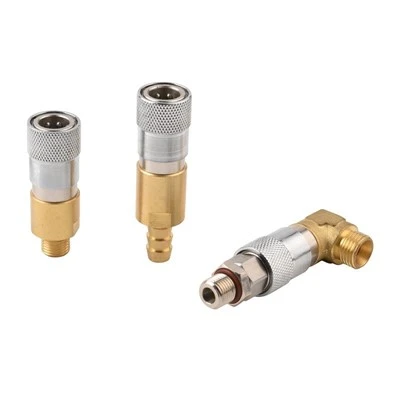
First, let’s cut to the chase: Push Lok fittings aren’t just “push and go” — that’s the big myth most new installers buy into. I’ve seen people slam a tube in with a palm full of grease, or tap it with a hammer because it “felt loose,” and both lead to leaks. The seal relies on three specific, non-negotiable steps, and skipping even one will cost you. Let’s break each down like we’re walking through a job together, no fancy terms.
First off, prep your tube like it’s the main character here. The biggest seal killer we see? A scratched, burr-covered, or dirty tube end. Push Lok fittings work by sliding a precision-machined O-ring over a smooth, clean tube surface — if there’s a tiny burr left from cutting the tube, that O-ring will tear mid-push, and you won’t even notice until you pressurize the system. Here’s how to do it right: First, use a tube cutter, not a hacksaw. Hacksaws leave ragged edges and burrs that are impossible to file completely flat, and even a 1/32-inch burr is enough to break the O-ring’s seal. For tube cutters, get one sized exactly to your tube OD — no squeezing a 1/4-inch cutter on a 5/16-inch tube, that’ll crush the end. After cutting, inspect the end: run your finger (or a credit card edge) around it. If you feel any rough spots, use a deburring tool — not a pocket knife, which leaves metal shavings that get stuck in the fitting’s body — to smooth the inside and outside of the tube end. Pro tip from our shop: blow the tube out with compressed air (or even your mouth, if air’s not handy) to get rid of all the metal shavings or dust. Even a tiny piece of grit between the O-ring and tube will cause a pinhole leak.
Next, align and insert the tube — but not blindly. A lot of installers push the tube in at a tilt, thinking the “click” will fix it, but that’s another mistake. Push Lok fittings have a stop inside the body — once the tube hits that stop, it’s seated correctly, not before. Here’s the trick: hold the tube straight, parallel to the fitting’s body, and push firmly — don’t twist it, don’t wiggle it. You’ll hear a distinct “click” — that’s the collet (the little toothed ring inside the fitting) locking into the tube’s OD grooves. But don’t stop there: pull back firmly on the tube with one hand while holding the fitting steady with the other. If it moves, that’s a bad sign — you didn’t get it all the way in, or the O-ring shifted. We call this the “pull test,” and every installer worth their salt does it, even if it feels redundant. I’ve seen a mechanic save an entire day’s work by doing this pull test on a 10-foot run before pressurizing it, instead of fixing a leak under 100 PSI later.
Now, the part that trips everyone up: checking the seal after installation. Wait, “after” — not before. A lot of people skip this step because they’re in a rush, but it’s non-negotiable. The right way to test isn’t just hooking up pressure — it’s a step-by-step check that catches issues before they turn into problems. First, if you’re working with a hydraulic, pneumatic, or fluid system, don’t jump to full pressure right away. Use a test pressure that’s 10-15% below your working pressure (so if you’re running 100 PSI, test at 85-90 PSI) and hold it for 2-3 minutes. Then, walk around each connection and feel for any dampness — even a tiny mist is a leak. For dry systems, look for bubbles if you dip the connection in soapy water (works like a charm, no special tools needed). If it leaks, don’t just push it harder and hope for the best — take the tube out, inspect the O-ring (replace it if it has any cuts, even tiny ones), and re-cut and deburr the tube end. Wait — did I mention O-rings are single-use? Yep. If you’ve pulled a tube out once, that O-ring is stretched, and you need a new one for the next install. That’s another common mistake people make, reusing O-rings to save 10 cents, and ending up with a callback that costs 10 times more.
Now, let’s talk about the stuff you might not have heard about, like material compatibility and environmental factors. Wait, you can’t just use any tube with Push Lok fittings — that’s a question we get all the time. For example, if you’re using a hydraulic system with oil, make sure your tube is rated for the fluid — if you use a regular PVC tube, the O-ring will swell or break down over time, leading to leaks. Our team tests all our fittings with 10+ common fluid types, so if you’re unsure, just ask. Also, temperature matters: if you’re working in extreme heat or cold, standard Push Lok fittings work great between -40°F and 212°F, but beyond that, you might need a specialty O-ring. No need to overcomplicate it, just check the tube and fitting ratings before you start.
Another thing: common installation mistakes we see every single day, so you can avoid them. First, don’t lube the tube or O-ring with petroleum jelly or any oil-based grease. That can break down the O-ring material and cause premature failure. Instead, use a water-based lubricant (like soapy water) if you need it — it helps the tube slide in easier without damage. Second, don’t force a tube into a fitting that’s too big or too small. Push Lok fittings are sized for exact tube OD, so if your tube is 1/8-inch over, it won’t seat right, and if it’s 1/8-inch under, the O-ring won’t seal. Third, don’t tap the tube with a hammer or mallet. That can bend the tube end, crush the collet inside the fitting, or even crack the fitting body — all of which will ruin the seal instantly. We’ve had customers send back fittings with hammer dents, and half the time they don’t even realize they did it.
Wait, let’s make this concrete with a quick, step-by-step example of a perfect installation, so you can reference it on the job. Let’s say you’re installing a 1/4-inch Push Lok elbow on a pneumatic system: 1. Grab your 1/4-inch tube, use a 1/4-inch tube cutter to make a straight, clean cut. 2. Deburr the inside and outside of the tube end, blow out all metal shavings. 3. Hold the tube straight, push firmly into the elbow until you hear the click. 4. Pull back hard on the tube — if it doesn’t move, good. 5. Run a quick soapy water test, hold for 2 minutes, no bubbles = perfect seal. Done in 60 seconds, no leaks, no headaches. That’s the sweet spot.
Now, a quick reality check: even the best install will fail if you skip one of these steps. We had a customer last month who installed a whole hydraulic line, then spent 3 hours tracing leaks because he forgot to deburr the tube end. The O-ring had a tiny tear from a burr he missed, and every connection was seeping. He ended up redoing all of them, and lost half a day. That’s why we’re so adamant about these steps — it’s not rocket science, it’s just attention to the small stuff.
At the end of the day, a proper Push Lok seal doesn’t depend on the fancy fitting itself — it depends on how you prep and install. The team here works hard to make fittings that are reliable, but we can’t fix a scratched tube or a misaligned push. If you’re still having trouble getting that perfect seal, or you want to make sure you’re using the right fittings for your system, don’t hesitate to reach out. We’re here to answer questions, walk through installations, and help you avoid those costly leaks.
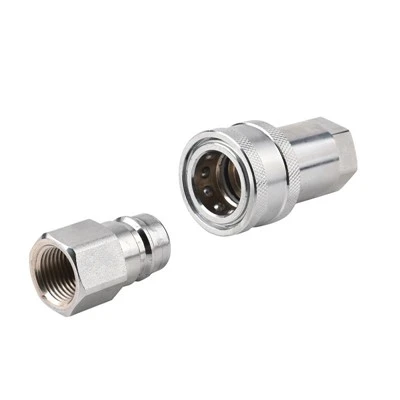
So, stop guessing and start getting it right the first time. Reach out today to connect with our team and get the support you need for your Push Lok fitting projects.
Mold Hydraulic Quick Couplings References:
- Fluid Power Society. (2022). Best Practices for Push-to-Connect Fitting Installation.
- Industrial Hose and Fitting Association. (2021). Seal Integrity Testing for Hydraulic and Pneumatic Connections.
- Push Lok Fittings Technical Documentation. (2023). O-ring Compatibility and Installation Guidelines.
Cixi Poolke Hydraulic Pneumatic Co., Ltd.
Cixi Poolke Hydraulic Pneumatic Co., Ltd. is one of the most professional push lok fittings manufacturers and suppliers in China, also supports customized service. Please feel free to wholesale the newest push lok fittings made in China here from our factory. Quality products and reasonable price are available.
Address: #88 Zhengtong Road, Kandun Industrial Park315303, Cixi, Zhejiang, China
E-mail: contact@poolke.com
WebSite: https://www.poolkecouplings.com/
