Hey there, Curtain Motor
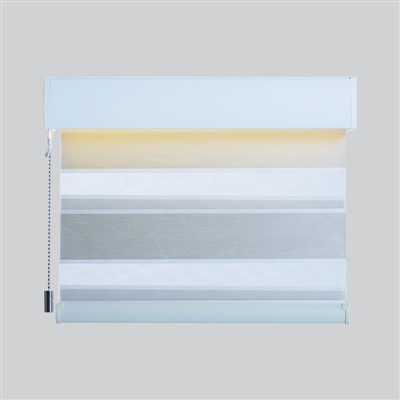
If you’ve ever stood in a dim room fumbling with a heavy pull-cord blind first thing in the morning, or struggled to reach that tall set of blinds above your kitchen sink, you’ve probably wondered: could there be a simpler way to make them move smoothly? As someone who’s spent the last 8 years selling and refining curtain motors—talking to installers, interior designers, and homeowners every week—I get this question nonstop: Can a curtain motor be used for motorized blinds?
The short answer is yes, but not all curtain motors are created equal, and figuring out which one works for your blinds means paying attention to a few key details that most people (even some new installers) miss. I’ve seen this play out dozens of times: a customer picks up a cheap curtain motor meant for thin, lightweight drapes, installs it on a set of blackout vertical blinds, and comes back a week later because it won’t close all the way. That’s not because the motor is broken—it’s because it was never designed for blinds, no matter how similar they look at first glance.
Let’s start with the basics: what’s the difference between a curtain and a blind, anyway? Curtains are fabric panels, usually hung on a track or rod, designed to drape. Blinds, whether they’re vertical, horizontal (like Venetian), roller, or Roman, are made of rigid or semi-rigid material—plastic, wood, metal, or thick fabric slats—that hold their shape. That structural difference means they put different kinds of stress on a motor. A curtain motor is built to pull soft, flexible fabric along a straight track, with a steady, moderate amount of force. A blind, especially a heavy Venetian or a blackout roller blind, needs a motor that can handle not just the weight of the material, but also the friction of slats moving past each other, or the tension in a roller blind winding up tightly.
Over the years, I’ve tested three main types of curtain motors with different blind types, and here’s what I’ve learned. First, there’s the common tubular curtain motor—this is the one most people picture when they hear “curtain motor,” the compact cylindrical unit that fits inside a curtain track. Most entry-level tubular curtain motors have a torque rating (that’s the rotational force the motor produces) between 10 and 20 Nm. For thin, lightweight roller blinds or small vertical blinds under 5 pounds, this works fine. I recently had a customer in Austin, TX, who swapped his old pull-cord 1-inch Venetian blinds for a small tubular curtain motor from our line, and he told me it’s “quieter and smoother than his old cord ever was.” The key here is the weight: if your blind is under 5 pounds, that entry-level curtain motor will do the job no problem.
But here’s where most people go wrong. If you have a heavier blind—say, a 10-pound blackout roller blind for a bedroom, or wood Venetian blinds for a living room—you need a curtain motor with higher torque, usually 25 Nm or more. Our mid-range curtain motor line, which starts at 25 Nm, works for up to 15-pound blinds, and we’ve had installers use these successfully on medium-sized vertical blinds too. The mistake many make is trying to save money by buying a 15 Nm curtain motor for a heavier blind. That motor will strain to move the blind, it’ll burn out faster, and you’ll end up with a service call within a few months. I always tell customers to weigh their blind first before picking a motor—it’s the single most important measurement.
Then there’s the roller curtain motor, which is designed for sheer or lightweight fabric roller curtains. Can this work for roller blinds? Only if the blind is the same size and weight as the curtain it’s built for. Sheer fabric roller curtains are usually lightweight, 3 to 5 ounces per square yard, while blackout roller blinds are 8 to 12 ounces per square yard. If you try to use a sheer roller curtain motor on a blackout blind, the torque is too low, so the motor will skip on the roller or stop mid-cycle. We actually get a lot of requests for this from homeowners who already have old sheer curtain motors and want to adapt them for new blackout blinds—my advice is to skip the adaptation. It’s cheaper and less frustrating to get a motor rated for blind use, even if it’s from our curtain motor line with the right torque.
Wait, but what about blind-specific motors? I get that question all the time. Why not just buy a blind motor instead of adapting a curtain motor? The truth is, high-quality curtain motors are often more flexible for blinds than blind-specific motors, especially if you have custom-sized blinds. Curtain motors are built to work with different track lengths and multiple panel configurations, which is perfect for large windows or patio doors with vertical blinds. Blind motors, by contrast, are usually sized for standard blind widths—if you have a 10-foot-wide roller blind, a standard blind motor might be too short, but a tubular curtain motor can be cut to fit any length as long as the torque matches.
Of course, there are a few caveats, and I won’t steer you wrong on those. First, compatibility with your blind’s hardware. Most curtain motors work with standard curtain tracks, but some blinds have their own mounting brackets. I always recommend checking the mounting dimensions of the motor before you buy—our curtain motors come with universal adapters that fit both curtain tracks and blind mounting systems, but not all brands do. Second, control options. Curtain motors usually work with remote controls, app controls, or voice assistants like Alexa and Google Assistant, which is exactly what most people want for motorized blinds. But if your blind requires a tilt function (like Venetian blinds that you can angle to adjust light), most basic curtain motors don’t have that feature. For tiltable blinds, you’ll want to look for a curtain motor that has integrated tilt functionality, or pair it with a separate tilt motor—something we offer as an add-on for our higher-torque models.
I’ve also seen a lot of confusion about power sources. Most curtain motors are either hardwired or battery-powered. For blinds, especially those in hard-to-reach places like second-story windows, battery-powered curtain motors are super convenient—no need to run electrical wiring. Our battery-operated curtain motors last up to 2 years on a single charge, even with daily use, which is long enough to avoid frequent replacements. Hardwired curtain motors are better for large, heavy blinds that need consistent power, but they require an electrician to install, so that’s a consideration if you’re doing a DIY project.
Let me share a recent example that sums this up perfectly. A customer contacted me last month, upset because he’d bought a $50 blind motor from a big box store for his 8-foot-wide, 12-pound blackout roller blind. It worked for two weeks, then the motor burned out when it tried to pull the tight blind all the way up. He’d heard we had curtain motors, so he ordered our 30 Nm tubular curtain motor, which arrived in two days. He installed it himself in 20 minutes, used the universal adapter to fit his roller blind’s hardware, and sent me a video a week later showing it moving smoothly, no noise, all the way up and down. He told me he saved $150 on the motor and the installation cost he would have paid for a blind-specific motor. That’s exactly the kind of win I love to see—using the right curtain motor for blinds, instead of overpaying for a labeled “blind motor” that’s actually the same core unit with a different sticker.
So, to circle back to the original question: Can a curtain motor be used for motorized blinds? Yes, as long as you match the motor’s torque and weight rating to your blind’s size and material, and check for mounting and control compatibility. It’s not a one-size-fits-all, but it’s a cost-effective, reliable option for most residential and small commercial blinds.

If you’re not sure which curtain motor is right for your blinds—whether you have Venetian, roller, vertical, or Roman blinds—feel free to reach out to us. We work with homeowners, installers, and contractors, and we can help you pick the perfect motor, answer any questions about installation, or even provide bulk pricing for larger projects. Don’t waste money on a motor that’s too weak or too expensive—let’s find the right curtain motor for your blinds today.
Tubular Motor References
- International Association of Home Builders. (2022). Motorized Window Treatments: Selection and Installation Guide.
- Smart Home Technology Association. (2023). Torque Requirements for Motorized Window Coverings.
- Curtain Motor Industry Standards. (2021). tubular Motor Performance Specifications for Light to Medium Weight Window Treatments.
Guangdong Langsen M.&E. Co., Ltd.
As one of the most professional curtain motor manufacturers and suppliers in China, we’re featured by quality products and good service. Please rest assured to wholesale customized curtain motor made in China here from our factory. Contact us for more details.
Address: No. 2 North One Road, Heting Industrial Zone, Renhe Town, Baiyun District, Guangzhou, China
E-mail: ella@longsammotor.com
WebSite: https://www.langsenmotor.com/
