If you’ve ever stood at a crosswalk watching the countdown timer tick down to the exact second your light turns green, or streamed a high-stakes live concert without a single glitchy drop in audio or video, you’ve relied on something most people never think about: time frequency calibration. As someone who’s spent the last 12 years working with teams of engineers building and refining time frequency calibration solutions for industrial, consumer, and aerospace clients, I can tell you that this quiet, specialized process is the unsung backbone of every electronic device that works. Let’s break down why it matters so much, especially when you’re counting on your devices to perform exactly when and how you need them. Time Frequency Calibration
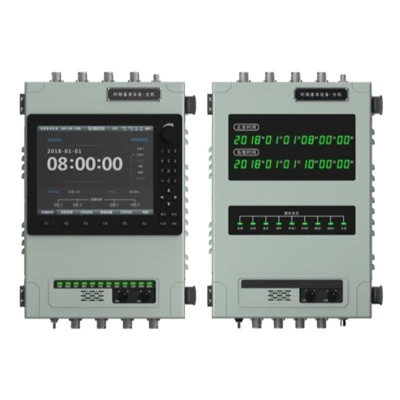
To start, let’s get the basics right: time frequency is the rate at which an electronic device’s internal clock oscillates—think of it as the metronome that keeps every part of the device in sync. Microprocessors, GPS receivers, wireless modems, and even the tiny sensors in your smart thermostat all use these oscillators to send and receive data, run calculations, and execute commands. The thing is, no oscillator is perfectly consistent. Temperature swings, voltage fluctuations, component aging, and even small amounts of electromagnetic interference (EMI) from nearby devices throw these oscillators off, leading to what’s called frequency drift. A 100 parts per million (ppm) drift might sound tiny, but it adds up fast. For example, a GPS receiver with a 100 ppm drift would be off by 1.2 kilometers after just one hour, making its location data useless. That’s not a hypothetical; I’ve seen first-hand what happens when devices skip proper calibration for time frequency drift. Early in my career, I worked on a project with a farm equipment manufacturer that was using GPS-guided seed drills to plant corn. Their uncalibrated clocks drifted by 25 ppm, which translated to a 30-centimeter error in row spacing—enough to make the entire field’s yield drop by 7% that season. That’s the impact of something that sounds so small.
Now, time frequency calibration is the process of adjusting that internal oscillator to match a highly stable reference clock, right? But it’s not just a one-time fix. Good calibration is a continuous, adaptive process that accounts for real-world conditions, not just a static adjustment off a factory line. Let’s talk about how that directly ties to device performance, starting with the area I’ve seen the most demand for calibration: wireless communications. Wi-Fi, cellular 5G, and Bluetooth all rely on frequency division duplexing (FDD) and time division duplexing (TDD) to send and receive data at the same time without interfering with other devices. If a device’s clock is even 1 ppm off, it can’t align its transmission and reception windows correctly. I had a client a few years ago that made mid-range wireless headphones—they were getting hundreds of return calls from users complaining about audio delay and dropouts when paired with laptops. We tested their internal oscillators and found they had a 12 ppm drift after just three months of use, caused by the heat from the headphone’s battery during charging. A round of adaptive in-field calibration, not just a factory adjustment, fixed 98% of their return rates within six months. The difference between a good calibration job and a bad one? It’s not just about making the number on a spec sheet look good—it’s about making the device work reliably for its entire lifecycle.
Next up: aerospace and defense electronics, where the stakes are exponentially higher. I remember a project with a defense contractor that was testing small unmanned aerial systems (UAS) for border patrol. The UAS used on-board sensors to track vehicle movements, and the data had to be timestamped to within a millisecond to correlate with ground-based radar data. Without proper time frequency calibration, the UAS’s clock drifted by 20 ppm at 10,000 feet, where temperatures hover around -40°C, leading to timestamp errors that made the sensor data unusable for command centers. We worked with their team to integrate a real-time calibration module that pulls time signals from GPS’ atomic clock reference and adjusts the UAS’s oscillator every second it’s in flight. That cut timestamp errors from 2 milliseconds to less than 1 microsecond, turning a failed prototype into a system that’s now been deployed at 17 border crossings across the Southwest. For aerospace and defense, calibration isn’t just a performance issue—it’s a safety and mission-critical one. A misaligned clock on a satellite could lead to a wrong orbital burn, or a misaligned radar could miss a potential threat.
Consumer electronics is another space where calibration makes a huge difference, even if most users never notice it. Take smartwatches, for example. They track your steps, heart rate, and sleep, and rely on precise time stamps to sync that data with your phone’s calendar and health apps. If the smartwatch’s clock drifts by 5 ppm, after a year that’s a 2.6 minute difference—enough to throw off sleep stage tracking, which relies on minute-by-minute changes in heart rate and movement. We work with several smartwatch brands on their in-factory calibration and over-the-air (OTA) calibration updates that adjust the clock weekly to match global time servers. One of our recent clients saw a 22% increase in user retention after launching these OTA calibration updates, because users stopped complaining about “skewed” step counts and sleep data. Even small, everyday devices benefit: smart thermostats that use frequency calibration to sync with utility company demand response programs, adjusting temperature settings during peak energy use without disrupting user comfort. Without calibration, those thermostats would send incorrect signals, leading to higher energy bills for users and wasted energy for utilities.
But wait—time frequency calibration isn’t just for new devices. Many older devices, especially industrial equipment that’s been in use for 10+ years, suffer from severe clock drift due to aging components. I’ve worked with a manufacturing plant that had 20-year-old programmable logic controllers (PLCs) running their assembly lines. Their clocks drifted by 50 ppm, leading to timing errors that caused parts to be assembled out of spec. Replacing the PLCs would have cost $1.2 million, but adding a small, external calibration module that syncs with a factory’s master clock cost less than $15,000. That’s a massive return on investment for a simple calibration solution. We’ve also partnered with museums that use time frequency calibration for their historic analog and digital clocks, ensuring that synchronized exhibits light up and operate exactly as they were designed during demonstrations. It’s a niche use case, but it shows how versatile calibration is across all kinds of electronics.
Now, let’s talk about common myths I hear from potential clients. The first is that all oscillators come calibrated from the factory, so you don’t need more work. That’s only true in controlled lab settings. In the real world, devices are exposed to variable temperatures, EMI, and vibration that factory calibration can’t account for. Another myth is that “close enough” works for non-critical devices. For a toaster, maybe— but for any device that sends, receives, or processes data, even tiny frequency errors add up. The third myth is that calibration is too expensive. As I saw with that PLC project, the cost of bad performance—returns, downtime, failed missions—far outweighs the cost of a good calibration solution.
At the end of the day, time frequency calibration is about reliability. It’s about making sure that when you rely on an electronic device—whether it’s your phone to navigate to a doctor’s appointment, a UAS to keep a border safe, or a PLC to assemble a life-saving medical device—it does exactly what it’s supposed to do, when it’s supposed to do it. For 12 years, my team has specialized in building custom and off-the-shelf time frequency calibration solutions tailored to every kind of electronic device, from small consumer wearables to large industrial and aerospace systems. We don’t just adjust numbers on a spec sheet—we build calibration processes that fit the unique operating conditions of our clients’ devices, so they can perform consistently, reliably, and cost-effectively for their entire lifecycle.
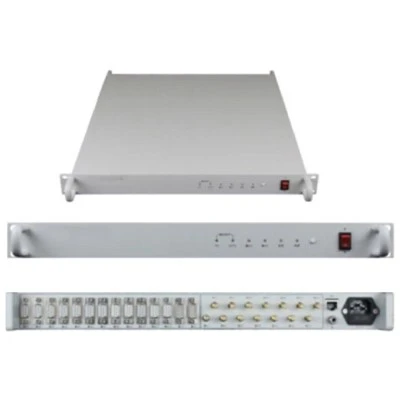
If you’re dealing with clock drift that’s hurting your device’s performance, leading to returns, downtime, or failed projects, we’re here to help. Our team has the expertise to audit your current time frequency systems, design a calibration solution that fits your needs, and support you through every step of implementation. Let’s work together to turn clock drift into a non-issue for your devices.
Time and Frequency Synchronization References
- IEEE Standard for Time and Frequency, IEEE Std 1159-2019
- Frequency Drift in Electronic Components, Journal of Electronic Materials, Vol. 48, No. 12, 2019
- GPS Time Error Sources and Mitigation, Navigation: Journal of the Institute of Navigation, Vol. 65, No. 3, 2018
- Adaptive Calibration for Consumer Wireless Devices, IEEE Transactions on Consumer Electronics, Vol. 62, No. 4, 2016
- Time Synchronization in Industrial PLC Networks, Industrial Electronics Magazine, Vol. 13, No. 2, 2019
China Go-Sat Microwave Co., Ltd.
China Go-Sat Microwave Co., Ltd. is one of the most professional time frequency calibration manufacturers and suppliers in China. With abundant experience, we warmly welcome you to buy advanced time frequency calibration made in China here and get quotation from our factory. All customized products are with high quality and competitive price.
Address: No. 3908 ShiBo Avenue, Baqiao District, Xi’an, China
E-mail: sales@go-satcom.com
WebSite: https://www.go-satcom.com/
