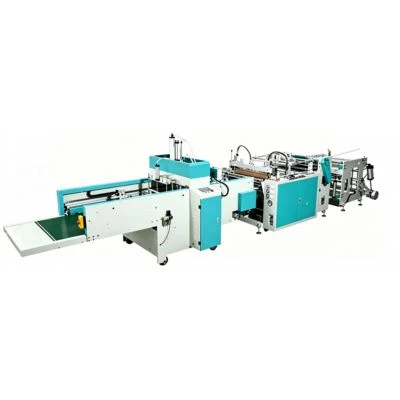
Adjusting the film blowing ratio in a mono layer film blowing machine is a critical process that significantly impacts the quality, performance, and characteristics of the blown film. As a reputable supplier of mono layer film blowing machines, I understand the intricacies involved in this adjustment and the importance of achieving the optimal film blowing ratio for various applications. In this blog post, I will share my insights and practical tips on how to effectively adjust the film blowing ratio in a mono layer film blowing machine. Mono Layer Film Blowing Machine
Understanding the Film Blowing Ratio
The film blowing ratio, also known as the blow-up ratio (BUR), is defined as the ratio of the diameter of the blown film bubble to the diameter of the die. It is a crucial parameter that determines the physical and mechanical properties of the blown film, such as thickness uniformity, strength, transparency, and flexibility. A higher film blowing ratio results in a thinner and more stretched film, while a lower ratio produces a thicker and less stretched film.
The film blowing ratio affects the orientation of the polymer molecules in the film. When the film is blown, the polymer molecules are stretched in the machine direction (MD) and the transverse direction (TD). A higher BUR increases the orientation in the TD, which enhances the film’s tear strength and puncture resistance in that direction. Conversely, a lower BUR results in a more balanced orientation between the MD and TD, which may be desirable for applications requiring uniform strength in both directions.
Factors Affecting the Film Blowing Ratio
Several factors influence the film blowing ratio in a mono layer film blowing machine. Understanding these factors is essential for making accurate adjustments and achieving the desired film properties.
1. Polymer Resin
Different polymer resins have varying melt flow indices (MFI) and rheological properties, which affect their ability to be stretched during the film blowing process. Polymers with a higher MFI are generally more fluid and easier to stretch, allowing for higher film blowing ratios. On the other hand, polymers with a lower MFI are more viscous and may require a lower BUR to prevent film rupture or excessive sagging.
2. Die Design
The design of the die, including the die diameter and the gap width, plays a significant role in determining the film blowing ratio. A larger die diameter allows for a lower BUR for a given film width, while a smaller die diameter requires a higher BUR to achieve the same width. The gap width also affects the thickness of the extruded film and can influence the maximum achievable BUR.
3. Cooling System
Efficient cooling is crucial for maintaining the stability of the blown film bubble and preventing it from collapsing or deforming. The cooling rate of the film affects its crystallization and orientation, which in turn impacts the film’s properties. A faster cooling rate can increase the film’s stiffness and clarity, allowing for higher BURs. Conversely, a slower cooling rate may result in a more flexible and less oriented film, requiring a lower BUR.
4. Take-Up Speed
The take-up speed of the film is the rate at which the film is pulled away from the die after it is blown. A higher take-up speed increases the draw-down ratio, which is the ratio of the final film thickness to the initial extruded thickness. A higher draw-down ratio can compensate for a lower BUR by reducing the film thickness, but it also affects the film’s orientation and mechanical properties. Therefore, it is important to balance the take-up speed with the BUR to achieve the desired film characteristics.
Steps to Adjust the Film Blowing Ratio
Adjusting the film blowing ratio in a mono layer film blowing machine requires careful attention to detail and a systematic approach. Here are the steps to follow:
Step 1: Set the Initial Parameters
Before making any adjustments, it is important to set the initial parameters of the film blowing machine, such as the temperature, screw speed, and die gap, according to the specifications of the polymer resin being used. These parameters should be optimized to ensure a stable and uniform extrusion process.
Step 2: Measure the Die Diameter
Accurately measure the diameter of the die. This measurement will be used to calculate the film blowing ratio.
Step 3: Determine the Desired Film Width
Based on the application requirements, determine the desired width of the blown film. This width will be used to calculate the target BUR.
Step 4: Calculate the Target Film Blowing Ratio
The target film blowing ratio can be calculated using the following formula:
[BUR=\frac{Desired\ Film\ Width}{\pi\times Die\ Diameter}]
For example, if the desired film width is 600 mm and the die diameter is 200 mm, the target BUR would be:
[BUR=\frac{600}{\pi\times200}\approx0.955]
Step 5: Adjust the Air Flow
The air flow into the blown film bubble is the primary means of controlling the film blowing ratio. Increasing the air flow will increase the diameter of the bubble and the BUR, while decreasing the air flow will reduce the bubble diameter and the BUR. Make small adjustments to the air flow and observe the changes in the film width and thickness.
Step 6: Monitor the Film Thickness and Quality
Use a thickness gauge to measure the thickness of the blown film at regular intervals. Ensure that the film thickness is uniform across the width and length of the film. Check the film for any defects, such as uneven stretching, bubbles, or lumps, and make adjustments as necessary.
Step 7: Adjust the Take-Up Speed
If the film thickness is not within the desired range, you may need to adjust the take-up speed. Increasing the take-up speed will reduce the film thickness, while decreasing the take-up speed will increase the film thickness. However, be careful not to increase the take-up speed too much, as this can cause the film to stretch excessively and affect its mechanical properties.
Step 8: Repeat the Adjustment Process
Keep making small adjustments to the air flow and take-up speed until the desired film blowing ratio and film quality are achieved. It may take several iterations to optimize the process, so be patient and persistent.
Troubleshooting Common Issues
Despite careful adjustment, you may encounter some common issues when adjusting the film blowing ratio in a mono layer film blowing machine. Here are some troubleshooting tips:
1. Film Rupture
If the film ruptures during the blowing process, it may be due to a high BUR, a low melt strength of the polymer resin, or improper cooling. Reduce the BUR by decreasing the air flow or increasing the die diameter. Check the polymer resin specifications and ensure that it has sufficient melt strength for the desired BUR. Increase the cooling rate to improve the film’s stability.
2. Uneven Film Thickness
Uneven film thickness can be caused by an uneven die gap, improper air distribution, or a worn-out die. Check the die gap and make sure it is uniform across the entire circumference of the die. Adjust the air distribution system to ensure that the air is evenly distributed around the film bubble. If the die is worn out, replace it with a new one.
3. Film Sagging
Film sagging occurs when the film bubble becomes too large or the air pressure inside the bubble is too low. Reduce the air flow to decrease the BUR and prevent the film from sagging. Check the air pressure system and make sure it is operating properly.
4. Poor Film Clarity
Poor film clarity can be caused by a high BUR, insufficient cooling, or contaminants in the polymer resin. Reduce the BUR to improve the film’s clarity. Increase the cooling rate to prevent the film from crystallizing too slowly. Check the polymer resin for any contaminants and ensure that it is clean.
Conclusion
Adjusting the film blowing ratio in a mono layer film blowing machine is a complex process that requires a thorough understanding of the factors involved and the ability to make precise adjustments. By following the steps outlined in this blog post and troubleshooting common issues, you can achieve the optimal film blowing ratio for your specific application and produce high-quality blown film with consistent properties.
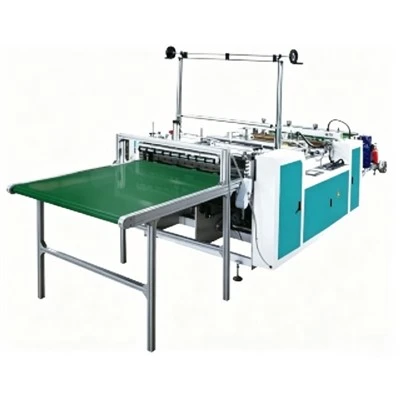
Film Blowing Machine As a leading supplier of mono layer film blowing machines, we are committed to providing our customers with the best possible solutions and support. Our machines are equipped with advanced features and technologies that allow for precise control of the film blowing ratio and other process parameters. If you are interested in learning more about our mono layer film blowing machines or need assistance with adjusting the film blowing ratio, please contact us to discuss your requirements. We look forward to working with you to achieve your film production goals.
References
- Harper, C. A. (Ed.). (2002). Handbook of plastics, elastomers, and composites. McGraw-Hill.
- Osswald, T. A., & Hernández-Ortiz, J. P. (2006). Polymer processing fundamentals. Hanser Publishers.
- Rosato, D. V., & Rosato, D. V. (2004). Injection molding handbook. Springer.
Ruian Jianhao Precision Machinery Co., Ltd.
As one of the most professional mono layer film blowing machine manufacturers and suppliers in China, we’re featured by quality products and good price. Please rest assured to wholesale durable mono layer film blowing machine for sale here from our factory. Welcome to contact us for customized service and quotation.
Address: No. 8, Jianshe Road, Beiyu Village, Shangwang Street, Ruian City, Wenzhou City, Zhejiang Province
E-mail: 1832333027@qq.com
WebSite: https://www.jianhaomachinery.com/
