Calculating the torque of a slide gate valve is a crucial aspect for ensuring its proper operation and functionality. As a slide gate valve supplier, I understand the importance of accurate torque calculations in various industrial applications. In this blog, I will delve into the key factors and methods involved in calculating the torque of a slide gate valve. Slide Gate Valve
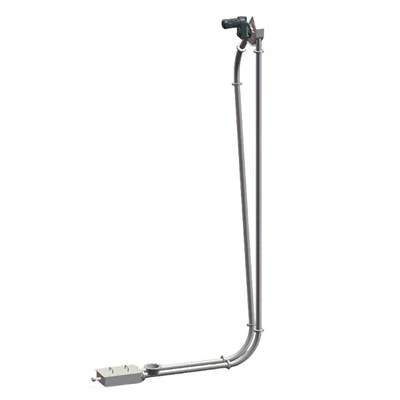
Understanding the Basics of Slide Gate Valves
Before we dive into torque calculations, let’s briefly understand what a slide gate valve is. A slide gate valve is a type of valve that uses a sliding gate to control the flow of fluids or bulk materials. It consists of a gate, which moves perpendicular to the flow direction, and a seat that provides a sealing surface. Slide gate valves are commonly used in industries such as mining, power generation, chemical processing, and food processing.
Factors Affecting Torque Calculation
Several factors influence the torque required to operate a slide gate valve. Understanding these factors is essential for accurate torque calculations. Here are the key factors:
1. Gate Design and Material
The design and material of the gate play a significant role in determining the torque. Gates can be made of various materials, such as stainless steel, carbon steel, or cast iron. The shape and thickness of the gate also affect the torque. For example, a thicker gate may require more torque to move compared to a thinner one.
2. Seat Material and Sealing Force
The seat material and the sealing force between the gate and the seat are crucial factors. A tight seal is necessary to prevent leakage, but it also increases the friction between the gate and the seat, resulting in higher torque requirements. Different seat materials, such as rubber, PTFE, or metal, have different friction coefficients, which affect the torque.
3. Fluid or Material Properties
The properties of the fluid or bulk material flowing through the valve also impact the torque. Viscosity, density, and particle size are important factors. For example, a highly viscous fluid or a material with large particles may require more torque to move the gate.
4. Operating Conditions
The operating conditions, such as pressure and temperature, can significantly affect the torque. Higher pressures and temperatures can increase the friction between the gate and the seat, leading to higher torque requirements.
Methods for Calculating Torque
There are several methods for calculating the torque of a slide gate valve. Here are the most common ones:
1. Empirical Formulas
Empirical formulas are based on experimental data and are widely used in the industry. These formulas take into account the gate design, seat material, fluid properties, and operating conditions. One of the most commonly used empirical formulas is the following:
[T = F \times r]
where (T) is the torque, (F) is the force required to move the gate, and (r) is the radius of the valve stem.
The force (F) can be calculated using the following formula:
[F = \mu \times P \times A]
where (\mu) is the friction coefficient between the gate and the seat, (P) is the pressure differential across the valve, and (A) is the area of the gate.
2. Finite Element Analysis (FEA)
Finite Element Analysis is a numerical method that can be used to simulate the behavior of the slide gate valve under different operating conditions. FEA software can model the gate, seat, and fluid flow, and calculate the torque required to operate the valve. This method provides more accurate results compared to empirical formulas, especially for complex valve designs.
3. Manufacturer’s Data
Many slide gate valve manufacturers provide torque data for their valves based on testing and experience. This data can be used as a reference for calculating the torque. However, it is important to note that the actual torque may vary depending on the specific operating conditions.
Step-by-Step Torque Calculation
Here is a step-by-step guide to calculating the torque of a slide gate valve:
Step 1: Determine the Gate Design and Material
Identify the type of gate (e.g., flat gate, knife gate) and the material it is made of. This information will help you determine the friction coefficient and other properties relevant to the torque calculation.
Step 2: Calculate the Pressure Differential
Determine the pressure differential across the valve. This can be obtained from the system design or measured using pressure sensors.
Step 3: Calculate the Area of the Gate
Measure the dimensions of the gate and calculate its area. The area is used in the force calculation.
Step 4: Determine the Friction Coefficient
The friction coefficient between the gate and the seat depends on the materials used. You can refer to the manufacturer’s data or use published values for common materials.
Step 5: Calculate the Force
Use the formula (F = \mu \times P \times A) to calculate the force required to move the gate.
Step 6: Calculate the Torque
Use the formula (T = F \times r) to calculate the torque, where (r) is the radius of the valve stem.
Importance of Accurate Torque Calculation
Accurate torque calculation is essential for several reasons:
1. Proper Valve Operation
If the torque is too low, the valve may not open or close properly, leading to leakage or flow control issues. On the other hand, if the torque is too high, it can cause damage to the valve components, such as the gate, seat, or actuator.
2. Energy Efficiency
By accurately calculating the torque, you can select the appropriate actuator for the valve. A properly sized actuator consumes less energy, resulting in cost savings and improved energy efficiency.
3. Safety
A valve that is operated with the correct torque is safer to use. It reduces the risk of valve failure, which can lead to accidents and environmental hazards.
Conclusion

Calculating the torque of a slide gate valve is a complex process that requires careful consideration of various factors. As a slide gate valve supplier, I recommend using a combination of empirical formulas, FEA, and manufacturer’s data to ensure accurate torque calculations. By doing so, you can ensure the proper operation, energy efficiency, and safety of your slide gate valves.
Gravity Diverter Valve If you are in need of slide gate valves or have any questions regarding torque calculation, please feel free to contact us for a detailed discussion. We are committed to providing high-quality slide gate valves and expert advice to meet your specific requirements.
References
- ASME B16.34: Valves – Flanged, Threaded, and Welding End
- API 600: Steel Gate Valves – Flanged and Butt – Welding Ends
- Valve Handbook, by Robert W. McKetta
Shanghai Hanye Engineering Technology Co., Ltd.
As one of the most experienced slide gate valve manufacturers and suppliers in China, we offer a wide range of products with superior quality. We warmly welcome you to buy customized slide gate valve at competitive price from our factory. For more information, contact us now.
Address: Building 7, No. 428 Banqiao East Road, Shanyang Town, Jinshan District, Shanghai
E-mail: Windy@hanye-tech.com
WebSite: https://www.hanyeconveying.com/
