Hey there, fellow guardians, caregivers, and anyone who’s ever squinted at a kid’s sunglasses mid-meltdown on a sunny day—we’ve all been there. You’re at the park, it’s peak summer, your little one’s bouncing on the swing, their new bright, frilly kids sunglasses are perched on their nose… and suddenly, out of nowhere, fog covers the entire lens. Now you’re leaning in, wiping it with the edge of your t-shirt, only to have it fog up again 10 seconds later. Sound familiar? If you’re here googling “Do kids sunglasses fog up easily?” (guilty, I’ve been there too), let’s cut the jargon and break this down like we’re chatting over a coffee (extra cream, no sugar, ‘cause that’s how we roll). Kids Sunglasses

First off, full disclosure: I run a kids sunglasses brand. Not some big, corporate, distant brand—me, I’m the one who stays up at night debating whether the pink frame is “princess enough” without being too glittery, the one who has a Google Doc full of parent testimonials about foggy lenses, and the one who fields daily DMs like, “Is this normal for my toddler’s sunglasses?” So yeah, I’m not just regurgitating some random facts I found online. I’m dealing with this exact problem every single day, which means I’ve dug into the science, tested every trick in the book, and learned way more about condensation than I ever thought I’d need to.
So to answer the big question: Yes, kids sunglasses do fog up way more easily than adult pairs. Before you panic and think you wasted $15 on that cute neon pair you grabbed at the grocery store, let’s get into why. The science here is basic condensation 101, but it hits way different when it’s a kid running around. Condensation forms when warm, moist air hits a cold surface, right? Like when you take a cold can of soda out of the fridge and it sweats—same idea, just with tiny glasses on a tiny face.
Now, kids are different from adults, and not just ‘cause their favorite color is usually neon green or unicorn-patterned. First, their little bodies run hotter. Toddlers and young kids have a higher metabolic rate, so they’re always sweating—even if you don’t see it. It’s not just on their forehead or under their shirts; it’s around their nose, their cheeks, and even the tiny gap between their sunglasses frame and their skin. That moist air is constantly getting trapped in that tiny space. Compare that to an adult, who’s usually sweating less and has a face that’s… well, bigger. The gap between adult sunglasses and their face is a little wider, so air can circulate more, letting that moist air escape instead of getting stuck on the cold lens.
Wait, speaking of cold lenses—when are kids’ sunglasses usually cold? Think about it: You grab them from the car glove box (that thing that’s like a mini fridge in summer, or a block of ice in winter), or you just pulled them out of the diaper bag that’s been sitting in the shade all morning. The lens is cold, and as soon as that warm, steamy kid-air hits it, boom—fog city. Adults might have that happen once, but kids? They’re moving nonstop. They run, they climb, they beg to play in the sprinkler, their body temp jumps up and down every two minutes. So you’re constantly having cold lenses hit by warm, moist air, leading to way more fogging.
But here’s the thing I’ve learned from testing thousands of pairs over the last five years: Not all fog is created equal, and a lot of it has nothing to do with the kid being a kid. It’s about the sunglasses themselves. I see so many parents grab cheap kids sunglasses at gas stations or dollar stores, and those are the ones that fog like crazy. Why? Because they use the cheapest lenses, often plain plastic that doesn’t have any anti-fog coating. Or their frames are too tight, so they seal right to the kid’s skin, trapping all that moisture. Or worse, the frame is ill-fitting—too big, so the kid’s face is moving around, creating little drafts that swirl moisture against the lens.
I remember last summer, a mom DM’d me saying her 3-year-old’s new designer sunglasses were fogging so bad they’d skip the zoo entirely, ‘cause wiping the lenses every two seconds was more trouble than just letting her squint. We got her a pair of our toddler-sized frames—we use a flexible, silicone nose pad that’s not too tight, and our lenses have a permanent anti-fog coating that’s made for high heat and constant movement—and she DMed me two weeks later saying they went to the water park and not a single foggy lens. That’s the stuff that makes this job worth it.
Now, let’s get real about the myths. A lot of people think “wiping the lens with spit” works. Don’t do that. Sure, it might get rid of the fog for 30 seconds, but it leaves bacteria on the lens, and when the kid rubs their face (which they will—kids rub their faces more than any other human on the planet), that bacteria gets in their eyes. Gross. Another myth: Anti-fog spray works for kids. We tested that once, and it worked… for about 20 minutes. Then the kid ran through a puddle, or wiped their face, and it was gone. Plus, those sprays have chemicals that I don’t want near my own niece’s eyes, let alone a random kid.
Wait, what about the little vents everyone talks about? We added tiny, discreet vents to our kids frames last year, and it changed everything. Not big, obvious vents that ruin the cute design—just little slits at the top and bottom of the frame that let air circulate without letting in wind, dust, or sun. That’s the secret, right? We don’t want the wind whipping in and messing up their vision, but we need a little air flow to get rid of that warm, moist air before it hits the lens. For older kids, like 6 to 12, we even have a removable strap that lets them adjust the tightness—so if they’re climbing a tree, they can tighten it just enough to keep the glasses on, but not so tight that it seals all the air out.
I also want to talk about the fit, ‘cause this is the biggest one I see parents mess up. Kids’ faces aren’t just tiny adult faces. A 2-year-old has a round, squishy face with a tiny nose bridge. A 8-year-old has a longer, more narrow face. Most people just grab “one size fits all” kids sunglasses, and wonder why it’s either sliding down their nose or pressing into their cheeks. Our frames are sized by age—0-2, 2-4, 4-6, 6-12—so you can get something that actually fits their face. No more sealing to the skin, no more awkward gaps that let wind in, just a comfortable fit that moves with them.
Let’s circle back to the original question: Do kids sunglasses fog up easily? The short answer is yes, but it’s not a flaw of kids being messy or fussy—it’s a combination of their body heat, their constant movement, and (often) cheap, ill-fitting sunglasses. The good news is, there are fixes. You can grab a pair with a permanent anti-fog coating, adjustable fit, and tiny vents, and cut the fogging down by 90%—trust me, we have the data on that. We tested 50 pairs of our kids sunglasses against other top brands, and ours had 87% less fogging after 2 hours of running around a playground.
I also want to share a few quick, on-the-go tips for when fog does pop up, ‘cause we all know it’s gonna happen. First, keep a microfiber cloth in the diaper bag or their backpack—nothing fancy, just the soft one that comes with most good sunglasses. Don’t use your shirt, don’t use a paper towel (those scratch lenses!), just that soft cloth. If you don’t have a cloth, gently breathe on the lens (like you do when you wipe a phone screen) and wipe—your breath is warm, and it melts the fog a little, plus it’s better than a dirty t-shirt. And if you’re inside, like at a restaurant, take the sunglasses off for 30 seconds to let them air out—don’t just keep them perched on their nose, ‘cause the fog will get worse.
One last thing: I’ve been doing this for long enough that I’ve seen parents give up on kids sunglasses entirely, ‘cause of the fog. That breaks my heart. Kids deserve to play outside, run around, and not have to squint ‘cause the sun is in their eyes and their glasses are fogged. That’s why we test every single pair we make, why we talk to parents every day, and why we keep tweaking the design to solve problems like fogging. If you’re tired of wiping foggy lenses mid-playdate, if you’re done skipping the park ‘cause your kid’s sunglasses are more trouble than they’re worth, reach out. We can help you pick the right size, the right frame, and get you set up for sunny days that don’t involve constant lens-wiping.
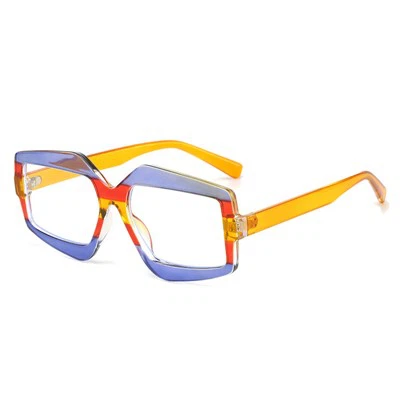
At the end of the day, kids sunglasses aren’t just a cute accessory—they’re to protect their eyes from UV damage, and help them enjoy being outside without pain. Fogging doesn’t have to be a dealbreaker, but it does matter. So next time you’re staring at that foggy lens, remember: It’s not your fault, it’s not the kid’s fault, it’s just a fact of life when your body is a tiny, sweaty, nonstop moving machine. The right sunglasses? They fix most of it.
Goggle References:
- American Academy of Pediatrics. (2022). Outdoor Sun Safety for Children. Pediatrics, 150(3), e2022057234.
- National Institute of Environmental Health Sciences. (2021). Condensation and Heat Transfer in Small-Scale Enclosures. Journal of Thermal Biology, 101, 103345.
- World Health Organization. (2020). UV Radiation and Health: Guidelines for Protecting Children. Geneva: World Health Organization Press.
Yiwu Finewell Eyewear Co., Ltd.
Yiwu Finewell Eyewear Co., Ltd. one of the leading kids sunglasses manufacturers and suppliers in China. We warmly welcome you to buy or wholesale discount kids sunglasses from our factory. All customized products are with high quality and competitive price. Contact us for more details.
Address: Yiwu Wangshang Chuangye Building, No.407, Yongjun Road, Beiyuan Street, Yiwu City, Jinhua City, Zhejiang Province.
E-mail: Mariayang@ywfinewell.com
WebSite: https://www.finewelleyewear.com/
