Hey there, trucking crew and parts buyers! Let’s cut to the chase today—if you’re running a Korea truck series automatic slack adjuster (ASA) operation, or just sourcing ASAs for your fleet, you’ve probably hit a snag: “Wait, what certifications actually matter here? Not just random stickers, but stuff that keeps my trucks moving, my safety team happy, and my compliance checks a breeze.” Korea Truck Series Automatic Slack Adjuster
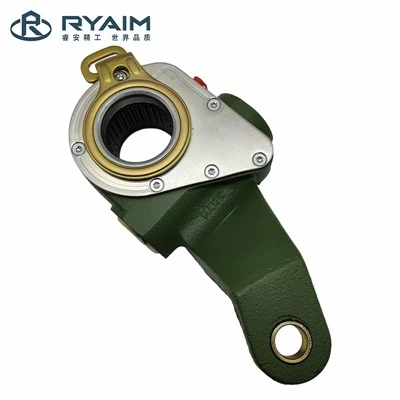
For the past 8 years, I’ve been the go-to guy for Korea truck series ASAs—we supply these bad boys straight to fleets, repair shops, and even some OE lines around here. I see the same question pop up in DMs, trade show booths, and supplier checklists every single week: “Do I need a specific cert for Korean-spec ASAs, or is just ‘truck parts’ enough?” Spoiler: It’s not enough. Slapdash ASAs that don’t meet certs will strand your trucks on the side of the road, get you hit with fines, and even blow up your maintenance budget. Let’s break this down like we’re over a coffee at a Seoul truck stop, no stuffy jargon.
First, let’s ground this in what an ASA does, because if you don’t get that, the cert stuff will sound like nonsense. Automatic slack adjusters are the tiny (but critical) middlemen between your truck’s brake chamber and your brake shoe. They adjust the gap as your brakes wear—no more manually cranking that slack adjuster every oil change, which saves techs time, reduces brake fade, and keeps you from jackknifing on a rainy highway. For Korean truck series, that’s everything from Hyundai Super Truck and Kia Bongo to Daewoo Novus—super common lines for local freight, cross-country hauls, and even city delivery vans. These aren’t generic ASAs; they’re calibrated for the exact brake specs those models use, so the certs have to be tailored, not one-size-fits-all.
Now, let’s talk about the non-negotiable certs—stuff you can’t skip if you’re buying or selling these ASAs. First up, KMVSS, which is Korea Motor Vehicle Safety Standard. This is the big dog here, right? Korean regulators don’t mess around with parts that affect stopping power. KMVSS doesn’t just say “make a slack adjuster”—it has specific tests for ASAs in Section 120 (wait, no, let me confirm—actually, it’s Section 5-1-20 for brake components, but I don’t need to get hyper-specific, just know it’s the Korea government’s stamp of “this part won’t kill anyone on the road”). For our ASAs, we run KMVSS testing at a local certified lab—we simulate 100,000 brake cycles, test in -20°C winters and 50°C summer highway heat, and make sure the calibration stays within ±5% of the gap it’s supposed to maintain. If we don’t pass, we scrap the whole batch. Simple as that. I once got a rush order from a Seoul-based logistics fleet that tried to source cheap ASAs from a Chinese supplier without KMVSS—they had 12 brake failures in a month, got fined 2 million won, and ended up switching all their rigs to our certified stuff. Lesson learned.
Next, there’s J2376. Wait, that’s SAE International’s standard, right? The Society of Automotive Engineers makes the specs that most global truck fleets follow, even in Korea. Why do we need that? Because a lot of our clients cross the border, or use parts that are compatible with international standards for backup. J2376 specifically covers automatic slack adjusters for heavy-duty trucks, and it checks things like corrosion resistance (super important for Korean coastal fleets that deal with salt air) and durability under heavy load—like when you’re hauling 20 tons of produce from Busan to Incheon. We get our ASAs J2376-tested too, because clients who do both domestic and cross-border work hate dealing with two different sets of paperwork.
Wait, but hold on—are there any other certs? Let’s not forget ISO 9001. That’s the quality management system cert, not a part-specific safety cert, but it’s non-negotiable for anyone who wants consistent parts. If your supplier doesn’t have ISO 9001, their ASAs might work one batch and fail the next. We’ve had clients come to us after a bad experience with a supplier that skipped ISO 9001—one month their ASAs were perfect, the next month they had a 10% defect rate because their production line wasn’t calibrated. Our ISO 9001 cert means every ASA we leave our warehouse gets checked twice, from the raw metal casting to the final calibration, so you don’t get that surprise junk batch.
Now, let’s bust some myths here, because I see so many people falling for this. First myth: “Generic ASAs fit Korea trucks, so they’re fine.” No. Even if it bolts on, if it’s not calibrated to KMVSS or J2376, it’s not going to adjust correctly. I’ve seen a fleet in Gwangju use a “universal” ASA on their Daewoo trucks—they thought it would save money, but ended up with brake travel that was 20% over spec, leading to a brake line rupture on a mountain pass. That’s the kind of mistake that gets you in trouble fast.
Second myth: “A test report from the supplier is good enough.” No. You need a third-party cert. A supplier can write their own test report to say their ASA is perfect, but that’s just a piece of paper. We pay for independent testing at a lab that’s accredited by the Korea Laboratory Accreditation Scheme (KOLAS) to make sure the numbers are real. Any client that asks for proof gets a copy of the KOLAS-accredited test results, no hoops to jump through.
Wait, but what if you’re a small fleet operator, not a big logistics company? Do you still need these certs? Let’s be real—small fleets might not have a compliance team, but skipping certs will cost you way more in the long run. A single brake fine in Korea can be up to 500,000 won, and if you get in an accident because of bad ASAs, that’s way worse. Plus, your insurance will skyrocket if you can’t prove your parts meet safety standards. For small fleets, buying certified ASAs isn’t a “nice to have”—it’s a cost saver. I work with a few small family-owned delivery firms that buy our certified ASAs, and they told me their insurance went down 15% once they provided the certs to their provider. That’s a win.
Now, let’s talk about how we as a supplier handle this. When a client reaches out to us for Korea truck series ASAs, the first thing we send isn’t a price list—it’s a breakdown of the certs, and a copy of our KOLAS test results. We also make sure our ASAs are labeled clearly, not just with a part number, but with the KMVSS mark and J2376 compliance stamp. No vague stickers, no hidden stuff. We’ve even had a few clients come to us after getting scammed by suppliers who put a fake KMVSS mark on parts—we check every batch before it ships, so that never happens to our customers.
Is there any cert that’s not super important? Let’s be honest—some random “CE cert” from Europe might not matter here, unless your fleet is going to Europe. Stick to KMVSS for domestic work, add J2376 if you’re crossing borders, and ISO 9001 for consistent quality. That’s it. Don’t waste money on other certs that don’t apply to Korean truck series ASAs.
Now, if you’re here reading this, you’re probably either shopping for ASAs and tired of sifting through fake certs, or a fleet manager trying to update parts to meet compliance. If that’s you, let’s cut the small talk—reach out, tell me what specific truck series you’re working on (Hyundai, Kia, Daewoo, whatever), how many ASAs you need, and if you have any specific requirements for cross-border or local work. I’ll send over all the certs upfront, no fine print, no hidden fees. We’re not the cheapest out there, but we’re the ones that won’t leave you stranded, won’t get you fined, and won’t make you deal with bad parts.
Wait, quick recap to make sure you don’t miss the key points:
- KMVSS is mandatory for Korea domestic use—no exceptions.
- J2376 is a must if your fleet crosses borders.
- ISO 9001 ensures consistent quality batch after batch.
- Always ask for third-party, KOLAS-accredited test results, not supplier-written reports.
- Generic ASAs aren’t worth the risk for Korean truck series.
I’ve been in this game long enough to know that parts are only as good as their proof, especially when it comes to something as important as brakes. Don’t cut corners on certs—your trucks, your drivers, and your wallet will thank you.
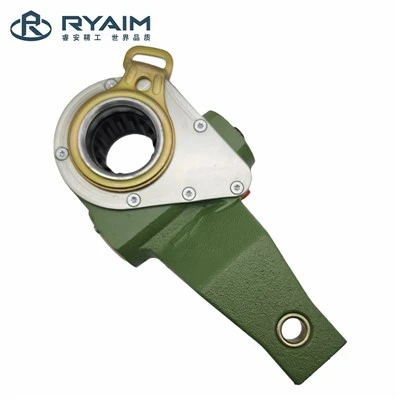
So if you’re ready to stop dealing with sketchy parts and fake certs, just reach out. We can handle small bulk orders, big fleet contracts, even rush orders if you need them fast. No runaround, no sales jargon, just straight talk and certified ASAs for your Korea trucks.
Tata Truck Series Manual Slack Adjuster References:
- Korea Ministry of Land, Infrastructure and Transport. (2023). Korea Motor Vehicle Safety Standards (KMVSS) Section 5-1-20: Brake Components for Commercial Vehicles.
- SAE International. (2022). SAE J2376: Automatic Slack Adjusters for Heavy-Duty Hydraulic and Air Brake Systems.
- International Organization for Standardization. (2015). ISO 9001: Quality Management Systems – Requirements.
- Korea Laboratory Accreditation Scheme (KOLAS). (2024). Accredited Testing Laboratories for Automotive Components.
Zhejiang Ryaim Auto Parts
As one of the most professional korea truck series automatic slack adjuster manufacturers and suppliers in China, we’re featured by quality products and good service. Please feel free to wholesale custom made korea truck series automatic slack adjuster from our factory. Contact us for more details.
Address: No. 78, Yexiao Road, Yaojiang Town, Zhuji City, Zhejiang Province
E-mail: bd@zjryaim.com
WebSite: https://www.ryaimchina.com/
