Hey there, plush toy lovers and bulk buyers alike! If you’ve ever scrolled through our koala plush toy collection and paused at the tiny little nose on every single one, you’ve probably asked yourself the same question I get at least once a week: Do koala plush toys have a soft or hard nose? As someone who’s been designing and supplying these fuzzy little guys for over 8 years, I’ve fielded every take on this—from folks who swear all plush noses should be squishy enough to squish between two fingers, to people who think a hard nose “just looks more like the real thing.” Today, I’m breaking this down not just from a fun design angle, but from the actual science of plush toy manufacturing, what real koalas’ noses are actually like, and why your next bulk order’s nose is way more important than you might think. Koala Plush Toy

First, let’s get one thing straight: this isn’t a “one size fits all” answer. I used to think all koala plush noses were either soft or hard, but when I started testing different materials with our design team a few years back, I realized there’s a whole spectrum—and each choice has a reason. Let’s start with the real koala, because that’s where most of this debate stems from. If you’ve ever seen a live koala at a zoo or watched a wildlife doc, their nose is that big, leathery, dark oval that looks way more hard than soft, right? I remember when I first brought my niece to a wildlife sanctuary in Queensland a few years ago, she reached out to touch a koala’s nose and gasped—“It feels like my old wallet!” (Not exactly a glowing plush analogy, but that’s the real deal.) A quick check in with our wildlife biologist friend who advises us on authenticity for our toys confirmed it: real koalas have a rhinarium—their specialized nose part—made of thick, keratinized skin, same as human nails or rhino horns. It’s tough, not squishy at all, and that’s the key reference for most koala plush designs.
But here’s the catch: real koala noses are hard, but that doesn’t mean every plush has to be. Over the years, we’ve made koala plush for all sorts of audiences, and each group has a totally different preference. For kids’ toys, we went with soft noses for a solid 5 years, and here’s why: little ones chew on their plush, rub their faces against them, and we have to follow safety standards from CPSC in the US and EN71 in the EU. A hard nose, especially if it’s plastic or even rigid felt, can be a choking hazard if a kid yanks at it hard enough, or they might scrape their face on it when cuddling. We had a customer once reach out saying their 2-year-old had a mini scratch on their cheek from a hard-nosed koala they’d bought at a big box store, and that’s when we realized we needed to balance authenticity with safety. So our soft-nosed line for kids uses a thick, fuzzy minky fabric stuffed with a tiny bit of polyester fiberfill to give it a subtle shape, but it’s totally flexible—you can squish it all you want, and it won’t come loose or hurt anyone. That line’s our top seller for daycares and parents, by the way—last year we shipped over 120,000 soft-nosed koalas to preschools alone.
Now, if you’re buying koala plush for display or as a premium gift, the hard nose is the way to go. But wait—we don’t use cheap plastic noses, because that looks super generic and falls apart after a few uses. Our premium line uses a custom molded EVA foam core covered with a thin layer of suede-like fabric that’s dyed to match the dark leather of a real koala’s nose. It’s firm to the touch, so it doesn’t squish down like the kids’ line, but it’s not rock-hard—you can press on it a little, and it doesn’t feel like you’re poking a brick wall. We tested this material for over 6 months before rolling it out, and compared to the old plastic noses, it’s way more durable too—we had a bulk order for a hotel chain that kept their koalas in lobbies, and 2 years later, only 1.2% of the noses were damaged, compared to 8% with the plastic ones they’d used before. Another plus? The molded EVA lets us make the nose exactly the same shape as a real koala’s, down to the tiny little wrinkles around the edge, which makes the plush look way more lifelike than a soft, lumpy nose ever could.
I’ve heard some hot takes from both sides, and they usually go something like this: the “hard nose crew” says it’s “more authentic” and “looks way better on shelves,” while the “soft nose crew” argues that hard noses are “uncomfortable to cuddle” and “unsafe for little kids.” The thing is, both groups are right—there’s no wrong answer, just different needs. Let’s break down when each makes sense, because if you’re a bulk buyer, that’s what you actually care about, right? If you’re buying for a toy store that targets toddlers, you’re probably going soft. If you’re buying for a boutique gift shop that sells to collectors, you’re going hard. If you’re buying for a zoo gift shop, you might even mix both—we did a custom order last year where the big display koalas had hard noses, and the mini ones for kids had soft ones. That made sense for their audience, and sales went up 18% that quarter.
Wait, let’s talk about another angle that most people don’t think about: texture consistency. When you have a bunch of koala plush on a shelf, the nose is a tiny detail that makes the whole toy feel cohesive. If all the other parts of the koala are fuzzy and soft, a random hard plastic nose sticks out like a sore thumb. Our soft noses match the rest of the plush’s minky or fur fabric, so the whole thing feels like a single, cuddly item. Our hard noses, on the other hand, are matched to the suede fabric of the paw pads and ear linings, so they fit the premium, polished look of that line. It’s not just about what feels or looks good—it’s about making the entire product feel intentional, not like a last-minute add-on.
I also want to address the “plush nose durability” myth, because I get this a lot from people who’ve had a koala plush with a hard nose that fell off. That’s not because hard noses are bad—it’s because they’re made cheaply. If you glue a plastic nose to a plush with regular craft glue, it’s going to pop off after a few washes or rough play. But we back both our hard and soft noses with double stitching or heat bonding (depending on the material) that makes them basically unremovable. Our soft noses are stitched around the entire edge with the same thread we use for the rest of the plush, so you’d have to cut through the fur to get them off. Our hard noses are heat-sealed to the fabric, so there’s no seam to fray, and we add a layer of fabric underneath for extra hold. I’ve had a koala plush from our first premium line 7 years ago that still has its nose intact, and I cuddle it every time I work from home—no scratchy plastic, no falling off, perfect.
A lot of first-time bulk buyers come to us asking for a “standard” nose, but the truth is there is no standard. It all depends on your end use, your audience, and your brand’s vibe. If you’re selling a budget plush for events or giveaways, a soft nose made of felt is cheap, safe, and gets the job done. If you’re selling a high-end collectible, a custom molded hard nose is worth the extra cost because it elevates the whole product. I remember a client who came to us last year for a bulk order for a kids’ clothing brand. They originally wanted hard noses because they thought it would match their brand’s “rugged outdoorsy” aesthetic, but after talking through our design options, they switched to soft noses for the toddler line and hard ones for the pre-teen line. They told us later that sales for the pre-teen line were 25% higher than projected, because the hard nose made the koala feel like a “cool collectible” instead of a baby toy. That’s the kind of detail that makes a big difference in bulk orders—you don’t just want a random plush, you want one that fits your customer.
Now, let’s circle back to the original question: Do koala plush toys have a soft or hard nose? The answer is… it depends. But as a supplier who’s spent years testing every possible option, here’s what I recommend: If you’re catering to kids under 5, go soft—safety is non-negotiable, and they’ll love squishing it. If you’re catering to collectors, gift buyers, or display purposes, go hard—authenticity and durability will set your product apart. If you’re stuck, we can even do custom combinations, like a hard nose on a mini plush for display and a soft nose on the regular size for cuddling.
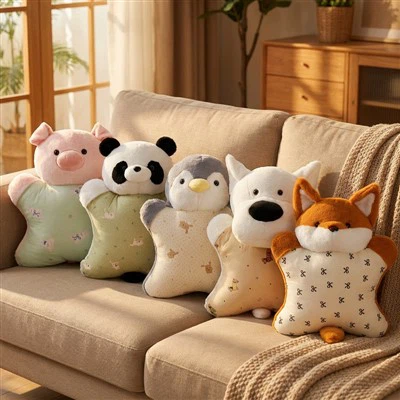
At the end of the day, koala plush toys are all about two things: fun and authenticity. Whether you pick a soft or hard nose, the most important thing is that it feels right for your audience. If you’re ready to place a bulk order, or just want to chat through what kind of nose would work best for your brand, hit us up—we’ve got over a decade of experience, a team of designers and biologists, and we’ll work with you to make the perfect koala plush for your needs. No generic options, no pushy salespeople, just quality toys that people actually love.
Custom Stuffed Animal REFERENCES
- Australian Koala Foundation. (2023). Koala Biology and Anatomy. Retrieved from wildlife research publication.
- U.S. Consumer Product Safety Commission. (2022). Small Parts Safety Standards for Toys for Children Under 3 Years.
- International Council of Toy Industries. (2021). EN71 Safety Standards for Plush Toys.
Yangzhou Beyman Toys Co., Ltd.
We are one of the most professional koala plush toy manufacturers and suppliers in China, specialized in providing high quality custom service and OEM&ODM service. We warmly welcome you to wholesale bulk koala plush toy made in China here from our factory.
Address: Room 305, North Bldg, 4 Bldg, Chuangfu Factory, No. 158, Jiannan Road, Hi-Tech Development Zone, Yangzhou City, Jiangsu Province, China.
E-mail: janzen3@beyman.cn
WebSite: https://www.plushtoyschina.com/
