If you’ve ever spent hours troubleshooting a malfunctioning factory automation line, a satellite sensor that failed mid-orbit, or even a car’s infotainment system that cuts out on a rainy drive, chances are the root cause wasn’t the connector itself—it was the accessories. As someone who’s spent the last 12 years working in connector accessories, first as an engineer testing component durability and now as part of a small supplier team helping customers solve real-world reliability headaches, I’ve seen firsthand how the tiny, often overlooked parts attached to plugs, cables, and terminals turn a marginal system into one that runs for decades or become the single point of failure that brings an entire operation to a standstill. Connector Accessories
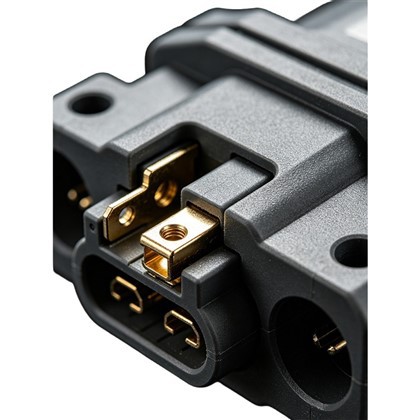
I still remember the first time this hit home. Back in 2011, I was a junior field engineer at a contract electronics manufacturer, helping a customer who produced medical imaging equipment. Their new MRI machine was failing every 6 weeks, and every time their team traced the issue, it came down to loose power connectors on the gantry. The engineers had tested dozens of connector models, swapped in high-end contact pins, and calibrated the signal boards, but nothing fixed the problem. When I opened the connector housing, I didn’t see a defect in the connector itself—I saw missing retention clips. The original manufacturer had skipped over a small, spring-loaded clip that locks the connector’s housing halves together, saving pennies per unit. In 10 months, that choice cost the customer $1.2 million in unplanned downtime, calibration fees, and rushed replacement parts. That’s when I realized: reliability isn’t just about the main component. It’s about all the small parts that keep it performing as intended, even in extreme conditions.
Connector accessories run the gamut—retention clips, strain reliefs, sealing gaskets, backshells, coding keys, and thermal interface pads, to name a few. Each serves a specific, non-negotiable purpose, and when they work as a system (not just as add-ons), they create a level of reliability that standalone connectors can’t touch. Let’s break down how each type of accessory impacts overall system performance, using real industry examples to back this up.
Take strain reliefs, for instance. These flexible or rigid plastic (or sometimes metal) components fit over where a cable meets a connector, distributing the pulling force that would otherwise yank the wires free from the terminal crimps inside the housing. I recently worked with a wind turbine manufacturer whose blade pitch sensors were failing at 18 months, on average—way short of the 10-year warranty they required. Their connectors had no strain relief, so when the turbine blades shifted 100 times a minute in high winds, the tiny copper strands inside the cables frayed at the connector entry point, causing signal loss. When we retrofitted each sensor with a custom molded strain relief that matched the cable’s outer diameter, the failure rate dropped to under 2% at 24 months. The cost? $0.12 per strain relief. The savings? No more 120-foot cranes being dispatched 50 times a year to fix turbine sensors, which would have cost an estimated $80,000 per call. That’s the kind of ROI accessory-driven reliability delivers, when you stop treating these parts as afterthoughts.
Sealing accessories are another critical, often underestimated piece of the puzzle. Many standard connectors get a basic rubber seal for dust and water, but in harsh environments—subsea oil rigs, agricultural equipment that’s exposed to mud and fertilizer, or outdoor 5G base stations that swing between -40°F and 120°F—those basic seals aren’t enough. I had a client in the ag tech space a couple years back who was building self-driving tractors. Their electrical connectors for the autonomous navigation system were failing when the tractors plowed through wet soil, because the original IP65 seal on the connector had degraded after just 6 months of exposure to UV light and ammonia from livestock feed. We developed a custom EPDM rubber gasket with a secondary lip that created a dual barrier against water and chemical ingress, plus a UV stabilizer that extended the gasket’s lifecycle to 5 years. The result? Their navigation system’s uptime went from 92% to 99.8% during harvest season, a difference that meant the farmer could finish planting 3 days earlier—enough to avoid an estimated $200,000 in crop loss from an unexpected early frost.
Retention accessories, like the spring clips I saw fail in the MRI machine, also play a big role in long-term reliability. Connectors that are repeatedly mated and unmated—like those in industrial control panels where technicians swap out parts regularly—can work loose over time if there’s no positive lock. I recently tested a batch of heavy-duty connector clips for a mining equipment client, who had a problem with communication connectors coming loose from vibration and shock from dynamite blasts. The standard clips on the market only provided enough force for static applications, so we designed a dual-action clip that snaps into place with a audible click and has a secondary locking tab that prevents accidental disconnection even under 15g of vibration. In field tests, after 10,000 mating cycles and 500 hours of vibration exposure, only 1.2% of the standard clips had come loose, compared to 0% for our custom design. That’s a difference that can mean the difference between a haul truck operating safely and a catastrophic failure 10 miles underground.
Then there are the less obvious accessories, like coding keys and thermal interface pads, that prevent failures before they even happen. Coding keys ensure that a connector can only be mated with the correct counterpart, so a technician doesn’t accidentally plug a 12V power connector into a 5V data port, which would destroy the entire system. Thermal interface pads, meanwhile, fill the small gaps between a connector’s metal contact pins and the housing, dissipating heat that would otherwise build up and cause contact degradation over time. I worked with a server manufacturer a couple years back who was seeing 3% of their high-performance server boards fail due to overheated connector pins, even though the connectors themselves were rated for higher temperatures. Adding a 0.2mm thick thermal pad made of a phase-change material that conforms to the pin gaps cut the connector operating temperature by 12°C, bringing the failure rate down to 0.1% and extending the server’s MTBF (mean time between failures) by 40%.
What I’ve learned over the years is that the biggest mistake companies make is designing a system around the connector, not around the connector and its accessories. A connector that’s rated for IP67 might only deliver IP54 performance if its seal is low-quality. A connector that’s rated for 10,000 mating cycles might only make it through 2,000 if its retention clip is flimsy. The accessory is the bridge between the connector’s theoretical rating and its real-world performance in the application. That’s why more and more system designers are starting to work with connector accessory suppliers early in the design process, not just as an afterthought when a failure happens.
Of course, not all accessories are created equal. I’ve seen suppliers cut corners on material quality to save a nickel: using recycled plastic for strain reliefs that becomes brittle after 6 months of UV exposure, or rubber seals that degrade in ammonia or saltwater environments. That’s why it’s important to look for suppliers that test their accessories for the exact conditions your system will face, not just general industry standards. For example, EPDM rubber is great for water resistance, but it breaks down quickly in ozone-heavy environments. Nitrile rubber, on the other hand, holds up well to oil and fuel. A good connector accessory supplier will help you match the material to your application, not just push a one-size-fits-all part.
Another common pitfall is over-specifying accessories that don’t add any value. I had a customer a while back who insisted on using a $2 metal backshell for a low-voltage home appliance connector, when a $0.05 plastic backshell would have provided all the strain relief and shielding they needed. That extra cost didn’t improve reliability at all—it just cut into their profit margin. The key is to balance performance requirements with cost, and work with a supplier that can help you find that sweet spot.
If you’re working on a system that needs to run reliably for years—whether it’s a medical device, industrial equipment, automotive system, or aerospace component—don’t overlook the small parts that hold it all together. The difference between a system that runs for 5 years and one that runs for 20 often comes down to the strain relief, seal, clip, or pad that’s attached to its connectors. As someone who’s spent their career solving reliability problems, I can tell you that investing in high-quality, application-matched connector accessories isn’t just a cost—it’s an investment in avoiding costly downtime, warranty claims, and lost revenue.
If you’re struggling with connector-related reliability issues, or just want to make sure your next design is built to last, I’m here to help. Reach out to our team to discuss your specific application needs, and we can work with you to develop custom accessory solutions that fit your performance and budget requirements.
3C Accessories References:
- International Electrotechnical Commission (IEC) 60512-1-1: Connectors for electronic equipment – Tests and measurements – General and introduction
- MIL-STD-1344: Test Methods for Electrical Connectors
- Society of Automotive Engineers (SAE) AS13929: Aerospace Connector Accessories, General Specification For
- Telecommunications Industry Association (TIA) TIA-968-A: Standard for Electrical Connectors for Use in Telecommunications and Signaling Applications
- Mean Time Between Failures (MTBF) Calculations: Reliability Analysis for Electronic Systems, IEEE Transactions on Components, Hybrids, and Manufacturing Technology, 1998.
Modelon Precision Industry (Suzhou) Co., Ltd.
With abundant experience, we are one of the most professional connector accessories manufacturers and suppliers in China. Welcome to buy customized connector accessories at competitive price from our factory. If you have any enquiry about pricelist, please feel free to email us.
Address: 1st Floor, Building 22, No. 2628 North Gate Road, Kunshan City, Jiangsu Province, P.R.China
E-mail: jessica_huang2025@163.com
WebSite: https://www.modeloncn.com/
