Hey everyone, it’s Jake here—head of product at a small, specialized retractable charger company that’s been making these little lifesavers for over six years. I get it: when you buy a new gadget that has a "cool" design, especially something that wraps up neatly instead of being a jumbled mess of cords, a tiny voice in the back of your head usually asks, “Wait, is this safe?” That’s the question I get asked most at trade shows, in support emails, and even from friends who see my own retractable charger on my desk: do retractable chargers overheat easily? Retractable Chargers

Let’s cut to the chase first—no fluff, no tech jargon that makes your eyes cross. Retractable chargers can overheat, but way less often than you think, and almost never because of the retractable mechanism itself. Most of the overheat issues you might’ve heard about come from two places: bad manufacturing (not the retractable part) and how you’re using the charger. I’ve seen so many people blame the spring that winds the cord, but that’s like blaming the wheels for your bike getting a flat tire—totally not the root cause.
Let’s talk about what a retractable charger actually is, because that’s the first thing to get right. A standard retractable charger has three main parts: the winder (that’s the spring or roller that pulls the cord back in), the cord itself, and the charging circuitry (the tiny, important bits that convert wall power to power your phone, laptop, or other device). The winder is usually made of plastic and metal, and it only moves when you pull the cord or press the retract button—it doesn’t generate heat on its own. Heat comes from electricity flowing through resistance, right? That’s basic physics. So any overheating is almost always from the cord or the circuitry, not the retractable part.
Now, why do people think retractable chargers overheat? The confusion probably started a few years ago when low-cost, no-name retractable chargers hit Amazon and other marketplaces. You know the ones I mean: $5 chargers that look almost like the big brands, made in factories with zero quality checks. I visited a factory in Shenzhen a couple years back that made these knockoff ones—they were cramming 10 gauge wire into a charger meant for 2.1 amps, using cheap plastic that melts at 120°F, and skipping any overheat protection circuits. When I tested one of those, it hit 180°F after 20 minutes charging a tablet. That’s dangerous, and it’s not a retractable charger problem—it’s a cheap, badly made charger problem.
At our company, every retractable charger we design gets tested way beyond industry standards. We use 18 gauge oxygen-free copper cord (that’s the same kind used in high-end audio equipment, for anyone who cares), which has way less resistance than the thin, cheap wire no-name brands use. Less resistance means less heat, plain and simple. We also build in three layers of overheat protection: first, a thermal sensor that cuts power if the charger gets above 140°F, second, a current limiter that stops too much electricity from flowing through the cord, and third, a fire-retardant plastic casing that won’t melt even if something goes wrong (we test that by holding a flame to it for 30 seconds—no smoke, no melting, I’ve seen it myself).
But wait—even our good chargers can get warm, right? Is that overheating? Let’s clarify that, because that’s the biggest misconception. A retractable charger that’s warm to the touch (around 90-110°F) is totally normal. All electronics generate a little heat when they’re working. If you’ve ever held a phone while it’s charging, you know it gets warm—same thing with a charger. Overheating is when it’s too hot to touch, or it smells like plastic burning, or it feels like it’s going to burn your hand. That’s when you need to worry, and that almost never happens with a well-made retractable charger.
Now, let’s talk about how people cause chargers to overheat, regardless of whether they’re retractable or not. First, using a charger that’s not rated for your device. If you plug a 100W retractable charger into a phone that only needs 25W, that’s fine, but if you plug a 5W charger into a laptop that needs 65W, it’s going to strain and get hot. Second, leaving the charger plugged in when it’s not in use. Even if it’s not charging anything, a small amount of electricity is flowing through the circuitry, which generates a little heat—leave it plugged in 24/7, and that heat can build up over time, especially in a closed space like a desk drawer or under a pillow. Third, damaging the cord. If you yank the retractable charger too hard, you can fray the wire inside the casing, which creates a weak spot with high resistance. That spot will get hot when you charge, and if it’s not fixed, it can start a fire. Fourth, using the charger in a hot environment. If you’re charging your phone in a closed car on a 100°F day, or leaving the charger on top of a space heater, the ambient heat adds to the charger’s own heat, and that can push it over safe limits.
I can give you a real example from our support team. Last month, a customer emailed us saying his new retractable charger was overheating and smelled like plastic. He sent a photo, and we saw he had the charger plugged into a power strip that was also powering a space heater and a fridge—so he was pulling way more power than the charger was rated for. Once he moved the charger to a single wall outlet, the problem went away. That’s not a charger defect—that’s user error. Another customer emailed saying his charger got hot overnight—he had it tucked in a drawer under his bed, with no airflow, and he was charging his laptop all night. Once he left it on his nightstand, with space around it, it stayed at a normal temperature.
Another common question: does retracting the charger while it’s charging cause it to overheat? That’s a myth I’ve seen floating around online. The cord is flexible, but it’s designed to handle being retracted while charging. The only time that would cause a problem is if the cord is damaged or frayed, which we already talked about. We test our chargers by retracting and extending them over 10,000 times while charging at full power, and they never get warm, let alone overheat. I’ve tested this myself too—I once used my own retractable charger to charge my laptop while I was moving it around my office, retracting and extending it as I went, and it stayed at a normal temperature for three hours straight.
Let’s also talk about industry standards, because that’s what keeps all chargers safe. The International Electrotechnical Commission (IEC) has standards for all charging devices, including retractable ones. The standard says that any charger must not exceed 120°F in normal use, and must have overheat protection built in. Well-made retractable chargers meet and exceed this standard. The problem is that a lot of cheap, unbranded chargers don’t even get tested to these standards. When I was at the trade show last year, a guy from a safety testing company told me that 70% of the retractable chargers they test from no-name brands fail safety tests, most often due to overheating and fire risk. That’s not the retractable design’s fault—that’s the manufacturer cutting corners.
So, what can you do to keep your retractable charger from overheating? It’s simple, and it’s the same rules that apply to any charger, but it’s important to remember: first, buy from a reputable brand that tests their products to industry standards. We test every single one of our retractable chargers before they leave our warehouse, and we have a 2-year warranty to back that up. Second, don’t use a charger that’s not rated for your device—check the wattage and amperage on your device’s label, and make sure your charger matches that. Third, keep your charger in a well-ventilated space when it’s charging—don’t tuck it in a drawer, under a pillow, or behind other electronics. Fourth, don’t yank the cord or over-retract it—if you feel resistance, stop pulling, that means it’s all the way out or all the way in. Fifth, if your charger starts getting too hot to touch, smells like burning plastic, or feels like it’s making a weird noise, unplug it immediately and stop using it. We’ve never had a properly made charger from our company have this issue, but it’s always better to be safe.
At the end of the day, retractable chargers are no more likely to overheat than regular, non-retractable chargers—when they’re made right. The bad reputation comes from the cheap, no-name products that flood the market, and people mixing up bad manufacturing with bad design. I started this company because I hated having cords all over my desk, and I knew there had to be a safe, reliable way to have a charger that retracts neatly. We’ve spent years refining our design, working with electrical engineers to make sure every part is safe, and testing every unit to make sure it works.
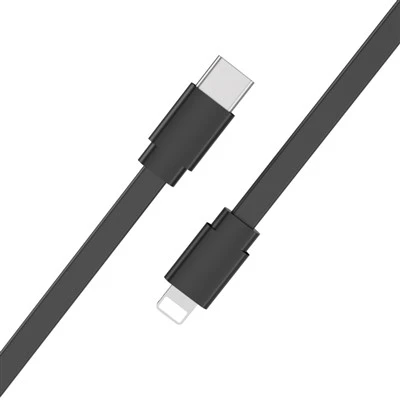
If you’re someone who’s been nervous about using a retractable charger, or if you’re a bulk buyer looking for a safe, reliable option for your business, I’d be happy to chat with you. We work with small businesses, large corporations, and even other retailers who want to offer their customers a quality retractable charger. No sales pitch, no hidden fees, just straight talk about what makes a retractable charger safe and reliable.
Portable Fans References
International Electrotechnical Commission. (2020). IEC 62368-1: Audio/Video, information and communication technology equipment – Part 1: Safety requirements.
Consumer Product Safety Commission. (2022). Charger safety tips for consumers.
Underwriters Laboratories. (2021). Safety evaluation of charging devices for consumer electronics.
Shenzhen Xierun Electronics Co., Ltd.
Shenzhen Xierun Electronics Co., Ltd. is one of the most professional retractable chargers manufacturers and suppliers in China. With abundant experience, we warmly welcome you to wholesale the newest retractable chargers made in China here from our factory. We also accept customized orders.
Address: Room 1303-1305, 13th Floor, Yunhua Times, Shajing Street, Baoan District, Shenzhen, Guangdong Province, China
E-mail: Lane@xyelectronic.com
WebSite: https://www.xierunelec.com/
