Hey there! As a supplier of oil – immersed transformers, one question I get asked a lot is, "Can an oil – immersed transformer operate at partial load?" Well, let’s dive right into it. Oil Immersed Transformer
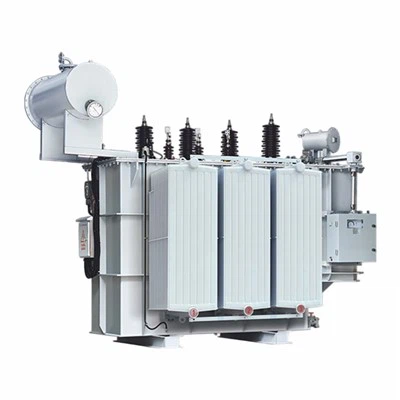
First off, let’s understand what partial load means. A transformer is designed to handle a certain maximum capacity, measured in kilovolt – amperes (kVA). When the actual load connected to the transformer is less than its rated capacity, we say it’s operating at partial load. For example, if you have a 1000 kVA oil – immersed transformer, and the load it’s powering only requires 500 kVA, it’s running at 50% partial load.
Now, the short answer is yes, an oil – immersed transformer can operate at partial load, and it does so quite often in real – world scenarios. There are a bunch of reasons why a transformer might run at partial load. Sometimes, the electrical system it’s part of is in its initial stages of development, and the demand for power is still growing. Other times, the load has seasonal variations. Think about a shopping mall. During off – peak seasons, the energy consumption is much lower compared to the holiday season.
One of the big advantages of an oil – immersed transformer operating at partial load is efficiency. You might think that running at full capacity all the time would be the most efficient, but that’s not always the case. Transformers have two main types of losses: copper losses and iron losses. Copper losses are proportional to the square of the load current. So, when the load is reduced, the copper losses decrease significantly. Iron losses, on the other hand, are relatively constant regardless of the load. At partial load, the overall losses as a percentage of the output power can be lower, leading to better efficiency.
Let me give you an example to illustrate this. Suppose we have an oil – immersed transformer with a rated capacity of 500 kVA. At full load, the copper losses are 5 kW and the iron losses are 2 kW. The total losses are 7 kW. The efficiency at full load is calculated as (Output Power / (Output Power+Losses)) * 100. So, it’s (500 / (500 + 7)) * 100 ≈ 98.6%. Now, if the transformer is operating at 50% partial load (250 kVA), the copper losses, being proportional to the square of the load current, drop to 1.25 kW (since 5 * (0.5)^2 = 1.25), and the iron losses remain 2 kW. The total losses are now 3.25 kW. The efficiency at 50% partial load is (250 / (250+3.25)) * 100 ≈ 98.7%. You can see that in this case, the efficiency is slightly better at partial load.
But it’s not all rosy. There are also some potential issues with operating at partial load for extended periods. One of the problems is over – insulation. Since the temperature rise of the transformer is lower at partial load, the oil and insulation materials may not reach their normal operating temperatures. Over time, this can lead to moisture accumulation in the insulation, which can reduce its dielectric strength and increase the risk of insulation failure.
Another concern is the potential for harmonic distortion. In modern electrical systems, there are a lot of non – linear loads like variable – speed drives and computers. These loads can introduce harmonics into the electrical system. When a transformer is operating at partial load, the impedance of the transformer can interact with the harmonics in a way that causes voltage and current distortion. This can affect the performance of other equipment connected to the same system.
To mitigate these issues, proper monitoring and maintenance are crucial. We, as a supplier, always recommend regular checks of the transformer’s insulation resistance, oil quality, and temperature. For the problem of harmonic distortion, we can also suggest the use of harmonic filters or other mitigation techniques.
Now, let’s talk about sizing the transformer for partial load operation. When you’re planning an electrical system, it’s important to choose the right size of the oil – immersed transformer. If you over – size the transformer, it will operate at a very low partial load most of the time, which can lead to the problems I mentioned earlier. On the other hand, if you under – size it, you risk overloading the transformer during peak demand periods.
We have a team of experts here who can help you with the sizing process. We’ll take into account factors like the expected growth of the load, the nature of the load (linear or non – linear), and the operating environment. Based on these factors, we can recommend the most suitable oil – immersed transformer for your needs.
In conclusion, an oil – immersed transformer can definitely operate at partial load, and it can even be more efficient in some cases. However, there are also some challenges that need to be addressed. As a reliable supplier of oil – immersed transformers, we’ve got the knowledge and experience to help you make the most of your transformer, whether it’s running at full load or partial load.
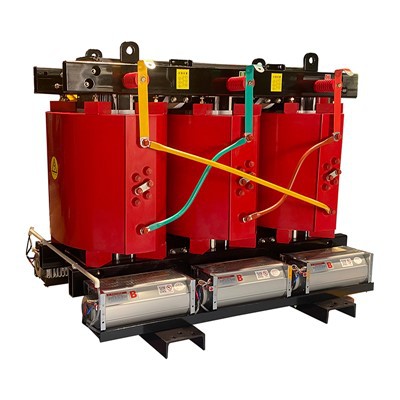
If you’re in the market for an oil – immersed transformer, or if you have any questions about partial – load operation or anything related to transformers, don’t hesitate to reach out. We’re here to have a chat, answer your questions, and help you find the perfect solution for your electrical needs.
Substation Transformer References
- "Electric Power Distribution Handbook" by Thomas A. Short
- "Transformer Engineering: Design, Technology, and Diagnostics" by G. Benoît Klempner, Isidoras K. Kosow, and James Welch
Nantong Yawei New Energy Technology Co., Ltd.
As one of the most professional oil immersed transformer manufacturers and suppliers in China, we’re featured by quality products and good service. Please rest assured to wholesale durable oil immersed transformer made in China here from our factory. Customized orders are welcome.
Address: Room 28-101, Building 27 and 28, No.333 Kaiyuan Avenue, Sunzhuang Subdistrict, Hai’an City, Nantong City, Jiangsu Province, China
E-mail: admin@nantongyawei.com
WebSite: https://www.nantongyawei.com/
