Mechanical gloves have emerged as a vital tool in various industries, greatly impacting the way users grip and handle objects. As a supplier of mechanical gloves, I have witnessed firsthand the transformative effects these gloves can have on grip performance. In this blog post, I will delve into the science behind how mechanical gloves affect grip, exploring the mechanisms, benefits, and real – world applications. Mechanical Gloves

Understanding the Basic Mechanics of Grip
Before we discuss how mechanical gloves affect grip, it’s essential to understand the natural process of gripping. In the human hand, grip is the result of a complex interaction between muscles, tendons, and bones. When we reach for an object, the brain sends signals to the muscles in our hands and fingers. These muscles contract, causing the tendons to pull on the bones, enabling the fingers and thumb to wrap around the object.
The strength and effectiveness of a grip depend on multiple factors. The friction between the hand and the object is crucial; if there is not enough friction, the object might slip. Additionally, the dexterity of the hand, which allows us to adjust the grip based on the shape and size of the object, is equally important. Joint stability also plays a role, as it provides a firm base for the gripping action.
How Mechanical Gloves Enhance Friction
One of the most significant ways mechanical gloves affect grip is by enhancing friction between the hand and the object. Most mechanical gloves are made with materials that are designed to have high coefficients of friction. For example, gloves with rubberized palms or fingertips can significantly increase the frictional force.
When the surface of the glove comes into contact with an object, the microscopic irregularities on the rubberized surface interlock with those on the object’s surface. This interlocking action creates a greater resistance to sliding, which means that the object is less likely to slip out of the hand. In industrial settings where workers handle heavy or slippery materials, such as metal parts or wet tools, gloves with enhanced friction can prevent accidents and improve overall productivity.
Another aspect related to friction is the texture of the glove. Gloves with a textured surface can further increase the friction by providing more contact points. A dimpled or patterned surface on the glove can distribute the pressure more evenly across the hand, increasing the overall gripping force. For instance, in rock climbing, mechanical gloves with a specialized textured surface can help climbers hold onto the rocks more securely, even in challenging conditions.
Improving Dexterity and Precision
Mechanical gloves can also improve the dexterity and precision of the grip. Many modern mechanical gloves are designed with a high degree of flexibility, allowing the fingers to move freely. This flexibility is achieved through the use of lightweight and stretchable materials.
For example, in the electronics manufacturing industry, workers need to handle small and delicate components. Mechanical gloves with precise finger movement capabilities enable them to pick up, place, and solder these components with great accuracy. The glove’s flexibility ensures that the user can perform fine – motor tasks without the hindrance often associated with traditional gloves.
Some mechanical gloves are also equipped with sensors and actuators. These technological features can provide feedback to the user, enhancing their sense of touch. For example, a glove with a force – sensing resistor can detect the amount of pressure being applied during a grip. This information can be used to adjust the grip strength, improving precision. In surgical applications, such gloves could potentially help surgeons perform more delicate procedures with greater control.
Offering Joint Support and Stability
Grip strength is not only about the force applied by the fingers but also about the stability of the hand’s joints. Mechanical gloves can provide support to the wrist, knuckles, and other joints in the hand. This support helps to reduce the risk of injury and also improves the overall effectiveness of the grip.
For workers in construction or manufacturing, who often perform repetitive gripping tasks, joint support can prevent the development of conditions such as carpal tunnel syndrome. Gloves with built – in splints or rigid supportive structures can help maintain the correct alignment of the joints, ensuring that the gripping force is distributed evenly.
In sports, such as weightlifting, mechanical gloves with wrist support can enhance performance. By stabilizing the wrist joint, the gloves allow the lifter to apply more force to the grip without the risk of the wrist collapsing under pressure. This increased stability translates into a stronger and more secure grip on the barbell or dumbbell.
Real – World Applications and Benefits
The impact of mechanical gloves on grip can be clearly seen in various industries and activities.
In the automotive industry, mechanics often need to handle greasy and heavy parts. Mechanical gloves with enhanced friction and dexterity enable them to work more efficiently. They can grip tools firmly, even when their hands are covered in oil, and perform precise tasks such as tightening small bolts.
In the logistics and warehousing sector, workers are constantly picking up and moving boxes. Gloves with a good grip can reduce the risk of dropped packages, minimizing damage and potential injuries. The joint support provided by these gloves also helps workers avoid fatigue during long shifts of manual handling.
In the medical field, mechanical gloves are starting to show promise. Surgeons could use gloves that enhance their sense of touch and dexterity, allowing for more precise and less invasive procedures. Rehabilitation patients can also benefit from gloves that provide support and assist in the recovery of grip strength.
Conclusion and Call to Action
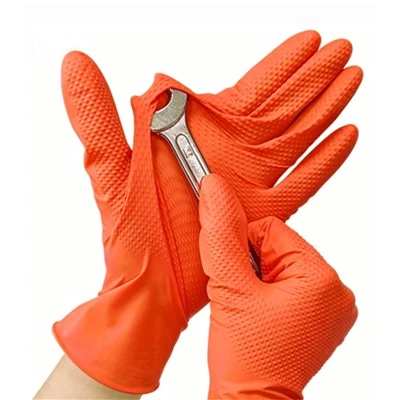
In conclusion, mechanical gloves have a profound impact on grip. They enhance friction, improve dexterity, and offer joint support, all of which contribute to a stronger, more precise, and safer grip. Whether you are an industrial worker, a sports enthusiast, or in a medical profession, the right mechanical gloves can significantly enhance your performance and reduce the risk of injuries.
Household Gloves As a supplier of mechanical gloves, I am committed to providing high – quality products that meet the diverse needs of our customers. Our gloves are designed with the latest technology and materials to ensure the best possible grip performance. If you are interested in learning more about our mechanical gloves or wish to discuss a potential purchase, please feel free to contact me. I am more than happy to provide you with detailed product information, offer samples, and discuss customization options to suit your specific requirements.
References
- Armstrong, T. J., Foulke, J. A., Joseph, B. S., & Goldstein, S. A. (1982). Investigation of factors associated with carpal tunnel syndrome. American Industrial Hygiene Association Journal, 43(10), 648 – 656.
- Cappelli, C., & Doulgeris, A. (2019). Glove friction and grip force in industrial applications. Wear, 434 – 435, 203018.
- Cesar, D. E., & Nussbaum, M. A. (2011). Influence of glove type on manual exertions and hand–object contact mechanics. Ergonomics, 54(5), 501 – 511.
Shanghai Haokuo Security Technology Co., Ltd.
With abundant experience, we are one of the most professional mechanical gloves manufacturers and suppliers in China. We warmly welcome you to wholesale premium mechanical gloves in stock here and get free sample from our factory. All customized products are with high quality and low price.
Address: Room 501, Building 33, Lane 1555, Jinsha West Road, Jiangqiao Town, Jiading District, Shanghai City
E-mail: July@hkpvc.com
WebSite: https://www.hkglove.com/
